

How Old Are Ducks When They Start to Lay Eggs
Your ducks typically start laying eggs between 4 and 8 months old, but this depends a lot on their breed and environment. Understanding how old ducks are when they start to lay eggs can help you better manage your flock.
Smaller breeds usually begin at 4-5 months, while heavier breeds like Pekins take closer to 6 or 7 months.
You’ll notice physical signs like a moist vent and nesting behavior before they lay.
Nutrition, lighting, and season also affect timing.
If you want to get the most out of your flock’s early egg-laying phase, keep exploring these key factors.
Typical Age Range When Ducks Start Laying Eggs
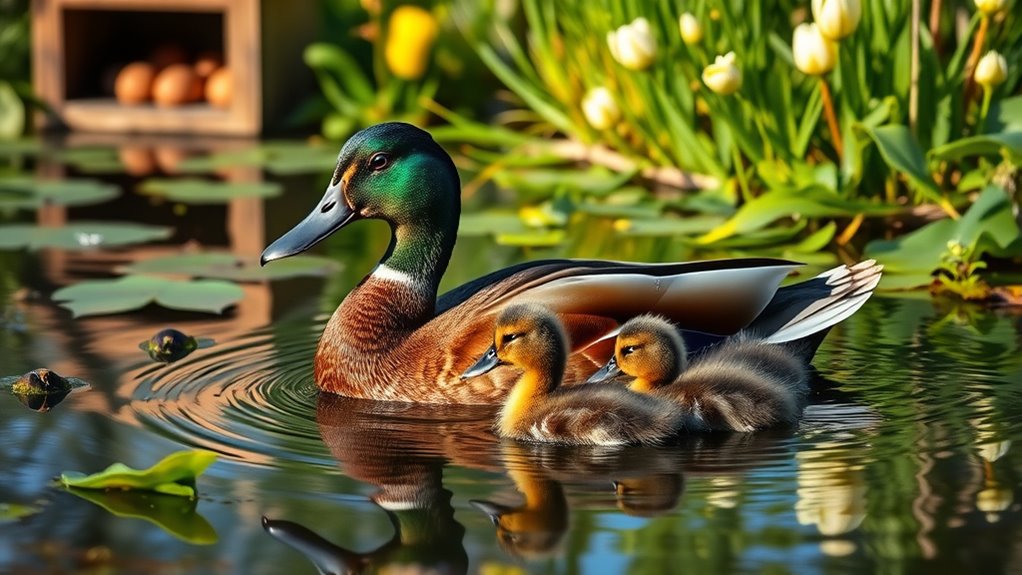
When ducks reach between 4 to 7 months old, they usually start laying eggs, though the exact timing depends on the breed and individual factors. You’ll notice smaller breeds tend to start laying earlier, often around 4 months of age. On the other hand, heavier ducks like Pekins might not start laying until they’re closer to 7 months old.
Muscovy ducks generally begin laying at about six months, or roughly 25 weeks. Keep in mind that each duck’s development varies, so the age when they start laying can shift based on their health, environment, and genetics. Understanding this typical age range helps you prepare for when to expect your ducks to begin contributing eggs.
How Different Breeds Affect When Ducks Start Laying Eggs
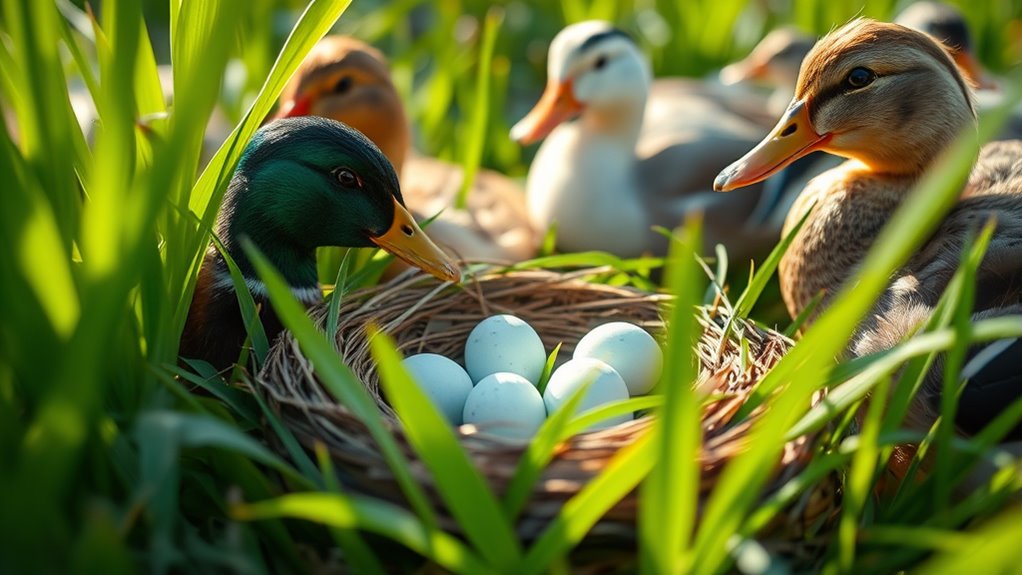
You’ll notice that smaller breeds like Khaki Campbells start laying eggs earlier than heavier breeds such as Pekins. Lightweight ducks often mature faster, while larger ones, including Muscovies, take more time to begin laying.
Understanding these differences helps you plan your flock’s egg production better.
Breed Maturity Variations
Although different duck breeds vary widely, their size and genetics play a key role in determining when they start laying eggs. Understanding breed maturity helps you predict when your ducks will begin producing eggs.
Smaller duck breeds like Khaki Campbells and Indian Runners often reach maturity earlier, laying eggs as soon as 4 to 5 months old. Bantam ducks, due to their small size and rapid growth, also start around 4 months.
In contrast, larger duck breeds such as Pekins and Muscovies tend to begin laying later, generally between 6 and 7 months. Some breeds may take up to 8 months.
Lightweight Vs. Heavyweight Breeds
Because breed size directly impacts maturity, lightweight ducks like Runners and Khaki Campbells start laying eggs as early as 4 to 5 months, while heavyweight breeds such as Pekins and Muscovies usually wait until 6 to 7 months.
When you choose between lightweight breeds and heavyweight breeds, keep these differences in mind:
- Lightweight breeds mature faster and begin laying sooner, which is great if you want early egg production.
- Heavyweight breeds develop more slowly, often requiring extra care before they start laying.
- The size and genetics of the breed affect not only when but how well they lay eggs over time.
Understanding these distinctions helps you plan better for your flock’s egg-laying timeline.
Muscovy Laying Timeline
When you raise Muscovy ducks, expect them to start laying eggs later than many other breeds—usually around 25 weeks old. This laying timeline is particularly slower compared to lightweight breeds like Khaki Campbell or Pekin, which begin earlier. Muscovy ducks don’t lay until they’re fully mature, typically around 6 months, though some may start as early as 5 months or as late as 7 months.
Environmental factors such as daylight length and temperature can also impact when their first eggs appear, sometimes causing delays. Once they begin, Muscovy ducks often enjoy an extended laying season that runs from late winter through summer. Understanding this laying timeline helps you set realistic expectations for their egg production compared to other breeds.
Signs Your Duck Is Ready to Lay Eggs
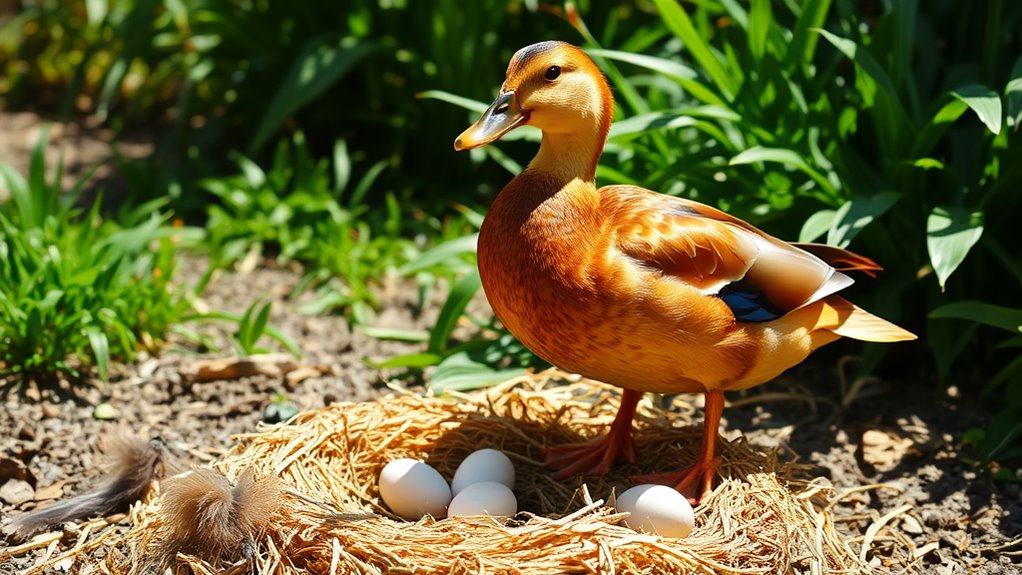
If you notice your duck’s abdomen swelling and its vent becoming large and moist, these are clear signs that it’s ready to lay eggs. Recognizing signs your duck is ready to lay eggs helps you prepare for the laying an egg process.
Here are three key indicators to watch for:
- Widened pubic bones, showing physical readiness for egg-laying.
- Changes in feather color or bill lightening, depending on the breed.
- Increased restlessness and nesting behaviors as it gets closer to laying.
Does Mating Affect When Ducks Start Laying?
You might wonder if mating affects when your duck starts laying eggs. While mating often happens before egg-laying begins, it doesn’t actually control the timing.
Your duck’s maturity and environment play a bigger role in when those first eggs appear.
Mating And Egg Production
How does mating influence a duck’s egg-laying schedule? You might think ducks start laying eggs only after mating, but that’s not the case. Ducks begin producing eggs regardless of mating, and fertilization isn’t necessary for egg production.
Here’s what you need to know:
- Mating behavior often starts around 4 months, slightly before ducks start laying.
- Some ducks might lay eggs a bit earlier if they mate, but it’s not a reliable trigger.
- Age, breed, and environment primarily determine when ducks start laying.
Timing Of First Eggs
While mating often starts shortly before egg laying, it doesn’t actually control when ducks begin producing eggs. Ducks typically start laying between 4 to 8 months old, depending on their breed and development. Even if a hen hasn’t mated with a drake, she’ll still lay eggs.
Mating behaviors might begin about one to two weeks before you notice laying, but they don’t trigger it. Some ducks start mating as early as 3 months, though egg laying usually waits until they reach sexual maturity. Having a mate around can signal readiness and often coincides with laying, but it doesn’t determine the exact timing.
How Seasonal Changes Affect When Ducks Start Laying
Because ducks rely on environmental cues, seasonal changes play a crucial role in when they start laying eggs. You’ll notice ducks generally begin laying in spring when daylight lengthens and temperatures rise. These seasonal changes signal their bodies to prepare for reproduction.
Ducks start laying eggs in spring as longer days and warmer temperatures trigger their reproductive cycle.
If you keep ducks in controlled lighting, you can prompt them to start laying earlier, regardless of the natural season. However, as days shorten and temperatures drop in fall and winter, egg production slows or stops.
Picture this:
- Brightening spring mornings encourage ducks to become active and start laying.
- Short, chilly winter days cause ducks to pause egg-laying.
- Artificial lights in a barn trick ducks into thinking spring has arrived early.
Understanding these shifts helps you predict and manage your ducks’ laying cycles effectively.
Why Ducks Start Laying Eggs at Different Ages
Although many ducks start laying eggs within a general age range, you’ll find that the exact time varies based on breed, genetics, and individual growth. Smaller breeds tend to start earlier, while larger breeds take longer to mature. Genetics play a key role in when ducks begin to lay eggs, influencing their sexual maturity.
Environmental factors also impact the start, but we’ll cover nutrition effects later.
| Factor | Effect on Start Age |
|---|---|
| Breed Size | Smaller start ~4 mo |
| Genetics | Influences maturity |
| Environmental | Can accelerate/delay |
Understanding these factors helps you predict when your ducks will start laying eggs and manage their care accordingly.
How Nutrition Affects When Ducks Start Laying
If you want your ducks to start laying eggs on time, you need to provide a balanced diet rich in protein, calcium, and essential vitamins. Proper nutrition directly influences the development of their reproductive organs, affecting when they begin to lay eggs.
To optimize egg production, focus on these key points:
- Feed a high-protein diet to support growth and egg formation.
- Include adequate calcium, such as oyster shell supplements, to strengthen eggshell quality.
- Transition ducks to breeder or layer feed as they mature for consistent nutrition tailored to laying needs.
Neglecting protein or calcium can delay egg-laying or reduce egg quantity and quality. By managing your ducks’ diet carefully, you ensure they reach their laying potential without unnecessary delays.
Common Mistakes That Delay Ducks’ First Eggs
When you overlook key factors like individual maturity rates or proper nesting conditions, you risk delaying your ducks’ first eggs. A common mistake is assuming all ducks start laying at the same age, ignoring their unique development.
Also, not providing cozy nesting materials or a secure spot can cause delays in egg-laying. Expecting eggs before ducks reach 4-8 months naturally leads to frustration and delays, as does failing to mimic seasonal lighting cues.
Another common mistake is neglecting health and nutrition, which are vital for ducks to reach the physical maturity needed for laying. By avoiding these errors, you can help guarantee your ducks start laying eggs on time without unnecessary delays.
Troubleshooting Why Your Duck Isn’t Laying Eggs
If your duck isn’t laying eggs, start by confirming its gender and age to verify it’s ready to produce.
Next, take a close look at the environment—factors like lighting, stress, and space can all impact egg laying.
Check Duck Gender
Although it’s frustrating to wait for eggs, you should first verify your duck’s gender, since only females lay eggs. Male ducks, called drakes, never lay eggs, so identifying your duck correctly saves you time.
Look closely at these features:
- Check for a curled drake feather on the tail—males have this distinctive feather, females don’t.
- Observe plumage colors—males often have brighter, more vibrant markings.
- Notice behavior—males can be more vocal or aggressive, while females focus on nesting.
If your duck lacks a drake feather and shows typical female behavior, she should start to lay eggs soon. Confirming gender ensures you’re troubleshooting the right issue before worrying about other factors.
Assess Duck Age
Since female ducks usually start laying eggs between 4 and 7 months old, you should check your duck’s age to determine if she’s ready. Ducks under 4 months haven’t reached maturity and usually start laying eggs only after that point. If your duck is younger than 4 months, it’s normal for her not to lay yet.
However, if she’s over 7 months and still not laying, she may be facing other issues like health problems or stress. Knowing your duck’s age helps you set realistic expectations and decide if you need to investigate further. Make sure you accurately identify her age to avoid confusion, as reaching maturity is the key factor in when ducks usually start laying eggs.
Evaluate Environmental Conditions
When environmental conditions aren’t ideal, your duck may stop laying eggs altogether. To troubleshoot, make sure you evaluate the surroundings carefully, especially if you have young ducks just starting to lay.
Here’s what to check:
- Temperature: Ducks get stressed if it’s too hot—above 80°F can reduce egg production.
- Lighting: Insufficient natural light or no supplemental lighting can delay or halt egg laying.
- Safety and Comfort: Loud noises, predators, or unsafe nesting areas can cause your ducks to stop laying temporarily or permanently.
Also, guarantee proper ventilation and moderate humidity inside the coop to keep ducks healthy. By addressing these factors, you’ll create an environment that encourages your ducks to lay consistently.
Preparing Nesting Areas for Ducks Starting to Lay
To encourage your ducks to lay eggs naturally, you’ll want to prepare nesting areas well before they reach 14 to 17 weeks of age. Start by providing a clean, dry nesting box filled with straw, hay, or shredded paper to create a comfortable spot for them to lay their eggs.
Place the nesting box in a quiet, low-traffic area away from predators and disturbances to reduce stress. Make sure the nesting site is easy for your ducks to access and at a height they can comfortably enter and exit.
Regularly clean the nesting box and replace bedding to prevent mold and parasites, ensuring your ducks will consistently lay their eggs in the designated spot, promoting healthy and natural laying habits.
Frequently Asked Questions
What Month Do Female Ducks Lay Eggs?
You’ll find female ducks usually lay eggs in March or April when spring begins. This timing depends on breed and climate, but increasing daylight and warmth encourage them to start laying eggs around these months annually.
Do Ducks Return to the Same Place Every Year?
Yes, ducks often return to the same place every year because they’re instinctively drawn to familiar, safe nesting sites. You’ll notice they prefer stable environments but might move if disturbed or conditions change considerably.
Can You Eat Duck Eggs if They Are Fertilized?
Yes, you can eat fertilized duck eggs. As long as you collect them regularly and don’t incubate them, they won’t develop embryos and remain safe and tasty, just like unfertilized eggs.
How Can You Tell When a Duck Is Going to Lay an Egg?
You’ll notice swelling signals, spread pubic bones, and subtle shade shifts showing she’s set to start.
Restless roaming, selecting spots, and early morning activity all suggest she’s soon to lay eggs, so stay alert!
Conclusion
Now that you know ducks typically start laying eggs around 5 to 7 months old, you can better prepare for their first clutch. For example, Sarah’s Khaki Campbell began laying at six months after she improved their diet and set up cozy nesting boxes.
By paying attention to breed, nutrition, and environment, you’ll help your ducks lay healthy eggs right on time. Keep observing and adjusting to see your flock thrive! Understanding how old ducks are when they start to lay eggs is key to successful duck egg production.