
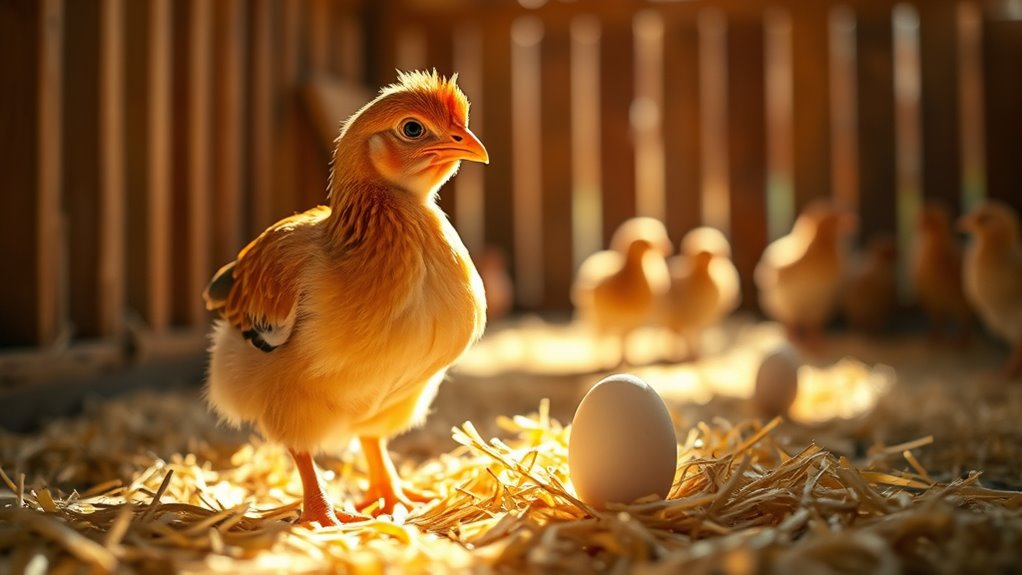
How Old Are Chicks When They Start Laying Eggs
Your chicks usually start laying eggs between 16 and 24 weeks old, but it depends on their breed and care. Understanding how old chicks are when they start laying eggs can help you prepare for this exciting stage.
Lighter breeds like Leghorns lay earlier, around 17-19 weeks, while heavier ones like Orpingtons may take up to 22 weeks or more.
Look for red, swollen combs and nesting behaviors as signs they’re ready. Proper nutrition and sufficient light help trigger laying.
If you want to understand what to expect from their first eggs and how to keep them laying well, there’s more to discover.
When Do Chicks Usually Start Laying Eggs?

Although the exact timing varies by breed and individual growth, most chicks start laying eggs between 16 and 20 weeks of age. When your chickens reach this stage, you’ll notice changes like increased nesting behavior and red, swollen combs. These signs mean they’re getting ready to start laying.
While some chickens begin laying eggs closer to 16 weeks, others take a bit longer, up to 20 weeks or more. Environmental factors such as light exposure, nutrition, and overall health also play a role in when your chicks start laying.
How Your Chick’s Breed Affects When It Starts Laying Eggs
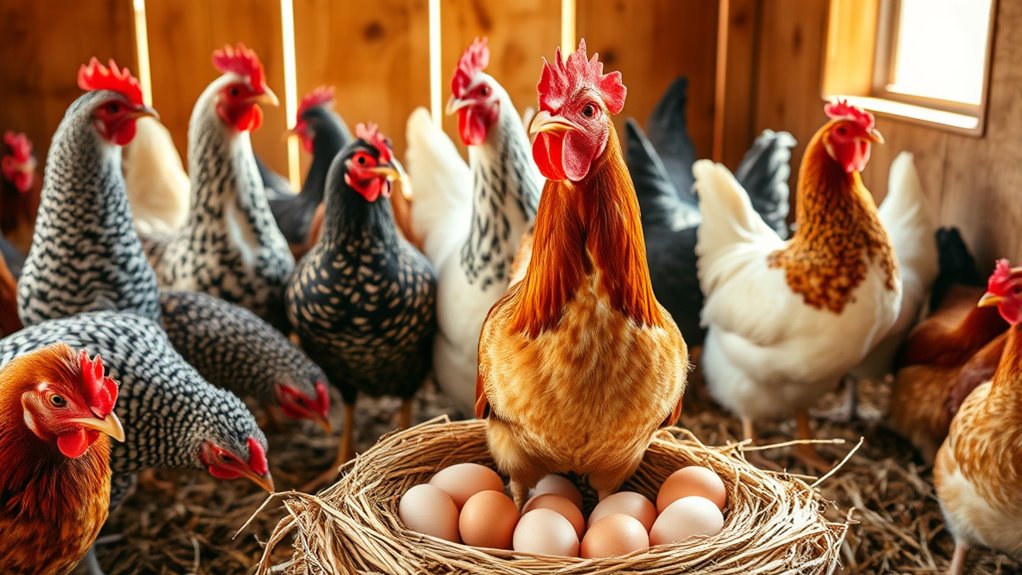
You can better predict when your chicks start laying eggs by considering their breed. Different breeds have varying laying ages influenced by their genetic traits. Fast-maturing breeds, like Leghorns, begin egg production earlier, while heavier or late-maturing breeds take more time.
Knowing your chick’s breed helps set realistic expectations for egg production.
| Breed | Laying Age (Weeks) | Characteristics |
|---|---|---|
| Leghorn | 17-19 | Fast-maturing, early layer |
| Rhode Island Red | 17-19 | Good egg producer |
| Orpington | 20-22 | Heavier, slower maturing |
| Ayam Cemanis | 24+ | Late layer |
Understanding these differences aids you in managing your flock’s egg production efficiently.
Physical Signs a Chick Is Ready to Lay Eggs?
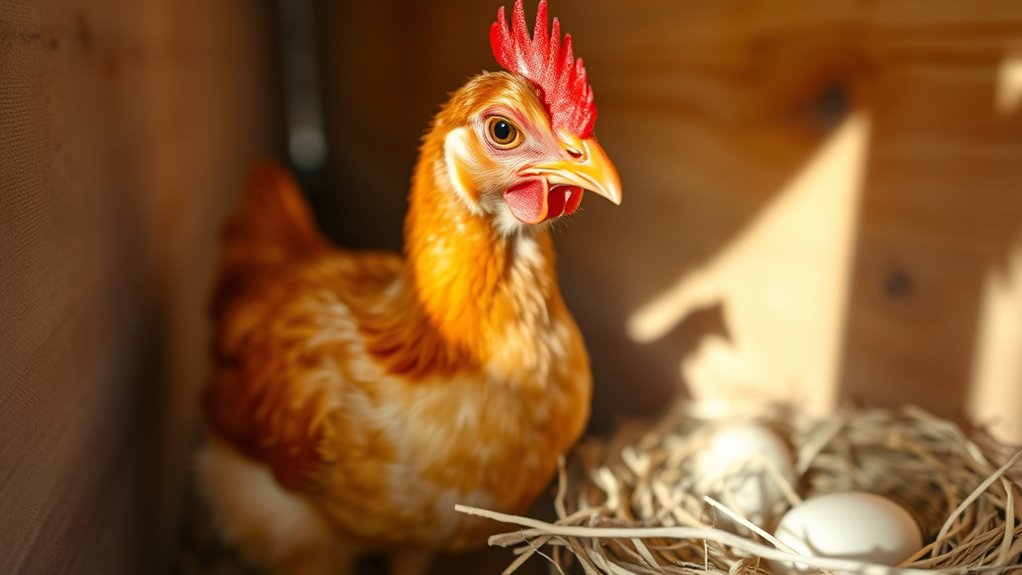
You’ll notice your chick’s comb and wattles growing larger and turning a bright red as she gets closer to laying. She’ll also start spending more time exploring and sitting in nesting boxes.
These physical and behavioral changes are clear signs she’s nearly ready to lay eggs.
Comb And Wattle Changes
When hens approach laying age, their combs and wattles grow larger, brighter, and more swollen due to increased blood flow and hormonal changes. You’ll notice the color deepening from pale pink to vivid red, a clear visual indicator of sexual maturity.
Typically appearing around 16 to 20 weeks, these physical changes signal that your hen is nearly ready to lay eggs. Watching the comb and wattles is one of the earliest ways to gauge readiness.
| Feature | Description |
|---|---|
| Comb size | Enlarges and becomes more swollen |
| Comb color | Changes from pale pink to red |
| Wattles size | Grow larger and firmer |
| Wattles texture | Smooth and firm |
These signs help you track your hen’s reproductive progress effectively.
Nesting Behavior Increase
As combs and wattles reach their vibrant peak, hens start showing more nest-focused behaviors that signal egg-laying is near. You’ll notice increased nesting behavior like frequent visits to the nest box, which usually happens around the laying age of 16-20 weeks. These hen signs include sitting in or testing the nest box and leaving more droppings nearby, indicating she’s getting ready to lay.
When you approach, she might squat, showing she’s preparing for egg production. Additionally, hens often explore nesting areas and investigate potential egg sites as part of their natural instinct. Paying attention to these behaviors helps you know when your chick is about to start laying eggs, making it easier to provide a comfortable and safe nest box environment.
Why Proper Nutrition Matters Before and During Laying
Although proper nutrition might seem straightforward, its impact on egg laying is profound and multifaceted. You need to provide balanced protein, calcium, and vitamins to support healthy egg development. From hatchling through maturity, proper nutrition ensures your chicks grow well and start laying on time.
Feeding a starter-grower feed with 20-22% protein helps develop their reproductive systems effectively. As they approach laying age, shifting to layer feed is vital to supply the nutrients needed for consistent egg production. If nutrition falls short or lacks quality, you risk delayed laying, weak shells, or irregular egg patterns.
How Daylight and Lighting Affect When Chicks Start Laying Eggs
You’ll notice that the amount of daylight your chicks get plays a big role in when they start laying eggs. When natural light falls short, adding supplemental lighting in the coop can help keep their egg production steady.
Understanding these seasonal changes lets you better manage their laying cycles year-round.
Daylight Hours Impact
When daylight lasts less than 14 hours, hens often delay starting to lay eggs or reduce their production. Daylight hours play a vital role in signaling hens when to start laying and maintain steady egg production.
If you want your hens to begin laying on time, consider how natural light affects them:
- Hens need 14-16 hours of light daily for maximum egg production
- Shorter daylight in winter can delay or pause laying
- Breeds sensitive to light changes react more to daylight hours
- Lack of light slows or stops hens from starting to lay
- Increasing daylight naturally encourages hens to lay earlier
Supplemental Coop Lighting
Since chickens need at least 16 hours of light daily to lay eggs consistently, you can use supplemental lighting in your coop to extend natural daylight during shorter fall and winter days.
Supplemental lighting with a 25-watt incandescent bulb per 100 square feet encourages earlier egg production by mimicking longer daylight hours. Using timers for artificial lighting guarantees consistent light periods, which sustains steady egg production year-round.
| Lighting Aspect | Effect on Chickens |
|---|---|
| Minimum Light Hours | 16 hours needed for consistent laying |
| Supplemental Lighting | Promotes earlier egg production |
| Artificial Lighting | Simulates longer daylight hours |
| Timers | Maintains steady egg production |
Seasonal Laying Variations
Extending daylight through supplemental lighting in your coop doesn’t just boost egg production—it also influences when your hens begin laying. Seasonal laying depends heavily on daylight hours, affecting when chicks lay their first egg. Shorter days in fall and winter often cause delayed laying, pushing the first egg into spring.
To manage this, you can:
- Provide 14-16 hours of light daily to mimic summer daylight hours
- Use timers to maintain consistent lighting schedules
- Prevent laying pauses during shorter days
- Encourage earlier first egg production in young hens
- Reduce seasonal laying fluctuations for steady egg supply
Preparing Nesting Boxes for Your Chick’s First Eggs
Although your chicks aren’t laying eggs yet, you should prepare several clean, cozy nesting boxes to encourage them when the time comes. For every four hens, set up one 1-foot square box lined with straw or shavings. Place these nesting boxes off the floor in the coop’s darkest corner to offer your backyard chickens privacy and comfort.
Keep the boxes uniform in appearance and location, as hens tend to reuse their preferred spots. Make sure to keep the nesting boxes clean and free from debris to make them inviting for laying eggs. If one box gets more popular, manage access to reduce stress and competition, preventing broken eggs.
Preparing nesting boxes thoughtfully sets your chicks up for a smooth handover to laying eggs.
What to Expect From Your Chick’s First Eggs: Size, Quality, and Frequency
When your chicks start laying eggs between 16 and 20 weeks old, you’ll notice their first eggs are often smaller and softer than what you might expect. The initial egg size is usually modest, and egg quality varies, with shells that may be thin or irregular.
Laying frequency at first can be sporadic as your hens adjust. Here’s what to expect from your chick’s first eggs:
- Small egg size compared to mature hens
- Soft or fragile shells
- Occasional double-yolked or yolkless eggs
- Irregular laying frequency in the first week or two
- Gradual improvement in egg quality and more consistent laying over time
As your chicks mature, egg size and quality improve, and laying frequency stabilizes.
Tips to Keep Your Hens Laying Consistently After They Start
To keep your hens laying consistently after they start, you’ll need to focus on their diet, environment, and daily care. Provide a balanced diet rich in calcium, like oyster shells, to support strong eggshells and steady laying. Maintain proper lighting—14 to 16 hours daily—using natural or supplemental light; this helps regulate egg production year-round.
Create a quiet, safe space to reduce stress, which directly impacts hen health and laying consistency. Keep nesting boxes clean and refreshed to encourage hens to lay in designated spots. Offering high-quality, protein-rich treats in moderation also boosts overall hen health, supporting continuous egg production.
Frequently Asked Questions
Can You Eat the First Chicken Egg?
Yes, you can eat the first chicken egg. It might be smaller or have a softer shell, but it’s perfectly safe and nutritious.
Just be aware that size and shell quality improve as the hen matures.
What Age Do Backyard Chickens Start Laying Eggs?
You’ll see your backyard chickens start laying eggs between 16 and 20 weeks, though breed and environment can shift this.
Watch for nesting behavior and comb growth as signs they’re ready to lay soon.
How Do You Know When a Hen Is Ready to Lay Eggs?
You’ll spot a hen glowing like a sunrise with bright red combs and wattles, nesting enthusiastic, squatting when you approach—signs she’s ready to lay eggs and start her daily gift to your flock.
How Long Do Chicks Stay With Their Mother?
Chicks usually stay with their mother for 4 to 8 weeks. During this time, the hen teaches them essential skills.
Once they’re fully feathered and independent, you’ll typically separate them for their own growth and safety.
Conclusion
By understanding when your chicks start laying eggs and what influences their timing, you’re setting the stage for a thriving flock. Remember, each hen is like a ticking clock, influenced by breed, nutrition, and light.
With proper care and preparation, you’ll soon enjoy fresh eggs rolling in regularly. Keep nurturing them, and your backyard will become a little egg factory.
This way, you can look forward to a steady supply of fresh eggs every day. Knowing how old chicks are when they start laying eggs helps you provide the best environment for your flock’s success.