
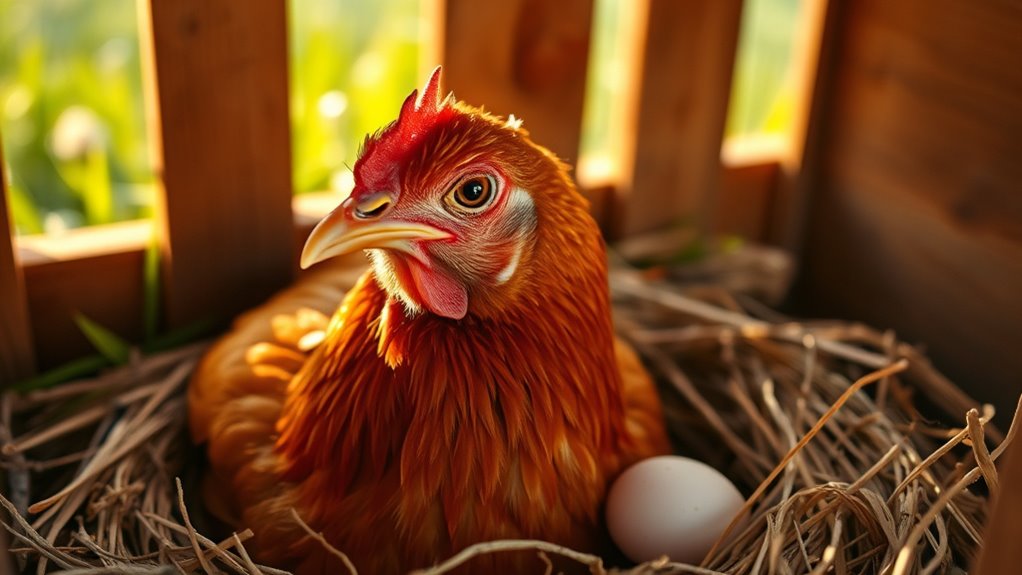
How Old Are Chickens When They Start to Lay Eggs?
You can expect your chickens to start laying eggs between 16 and 24 weeks old, depending on the breed, environment, and care you provide. Understanding how old chickens are when they start to lay eggs is essential for managing your flock effectively.
Smaller, early-maturing breeds like Leghorns may begin as early as 16 weeks, while larger breeds often take a bit longer.
Daylight plays a big role too—hens need around 14-16 hours of light daily to lay consistently.
Spotting physical and behavioral signs helps you know when they’re ready.
Keep going if you want to uncover tips on boosting and managing egg production.
When Do Chickens Start Laying Eggs?
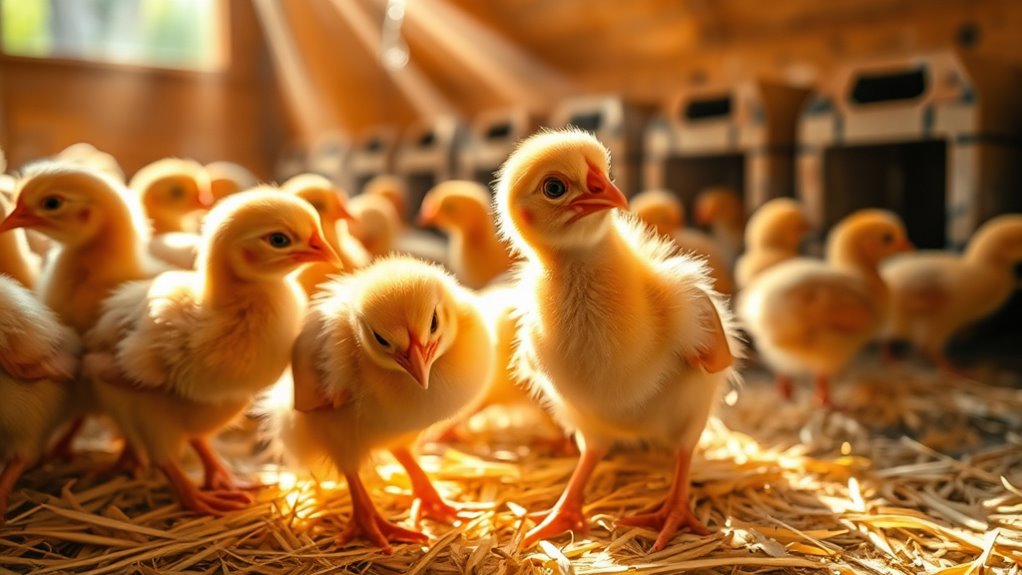
Although the exact age varies by breed and environment, chickens typically start laying eggs between 18 and 22 weeks. When chickens start laying eggs depends largely on the breeds of chickens you have, as some mature faster than others.
The age of hens influences egg production, with early first eggs often being small and irregular. You can encourage hens to reach laying age sooner by providing proper nutrition, reducing stress, and ensuring adequate daylight hours, which simulate natural conditions for egg production.
Which Breeds Start Laying Eggs Earlier?
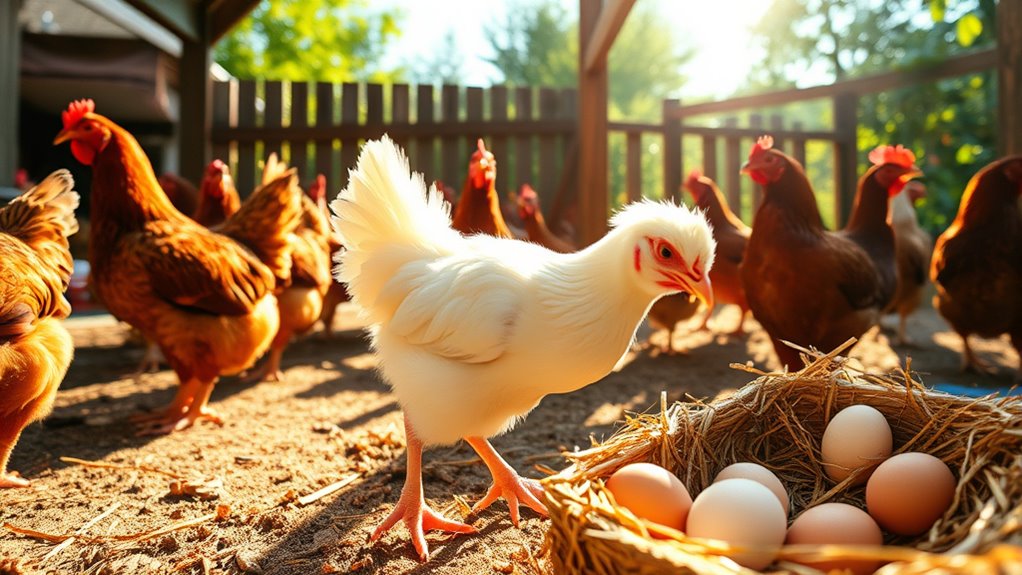
You’ll notice that some breeds, like Leghorns and ISA Browns, start laying eggs as early as 16 to 18 weeks. Smaller, lighter breeds tend to mature faster, while heavier breeds usually take longer to begin laying.
Understanding these breed differences helps you predict when your chickens will start producing eggs.
Early Laying Breeds
When you want chickens that start laying eggs early, breeds like Leghorns, Golden Comets, and Rhode Island Reds are great choices since they typically begin between 16 and 18 weeks old. These early laying breeds benefit from breed genetics that promote faster maturity, allowing them to start to lay their first egg as early as 4 months old.
If you’re aiming for high production and a quick start, consider these light-bodied breeds.
| Breed | Start to Lay (Weeks Old) |
|---|---|
| Leghorn | 16-18 |
| Golden Comet | 16-18 |
| Rhode Island Red | 16-18 |
| ISA Brown | 16 |
Choosing breeds with early production helps you enjoy eggs sooner.
Heavy Breeds Delay
Because heavier chicken breeds grow more slowly, they tend to start laying eggs later than lighter breeds. If you raise heavy breeds like Wyandottes, Orpingtons, or Barred Rocks, expect a delayed start in egg production, usually around 20 to 24 weeks. This delay happens because their larger body size requires more time to reach full maturity.
Breed genetics also play a vital role in when these heavy breeds start laying. Unlike lighter breeds such as Leghorns or Golden Comets that begin at 17 to 18 weeks, heavy breeds prioritize physical growth before egg production. Understanding this helps you set realistic expectations for your flock’s timeline and care needs, ensuring you support your chickens properly as they develop toward their first eggs.
Breed Impact Overview
Although breed differences can be subtle, they play a key role in how soon your hens start laying eggs. When you compare breeds, early layers like Sex Links and ISA Browns often begin laying as early as 16-17 weeks, thanks to their breed traits optimized for egg production. Similarly, Leghorns, Golden Comets, and Rhode Island Reds start around 17-18 weeks.
Smaller, lighter breeds tend to have an earlier laying age compared to larger, heavier ones. Heritage breeds such as Plymouth Rocks and Orpingtons usually start later, around 20-22 weeks. Understanding these breed traits helps you anticipate when your hens will begin laying, allowing you to plan your flock’s egg production efficiently.
Choosing breeds wisely impacts both timing and volume in your coop.
How Does Daylight Affect When Chickens Lay Eggs?
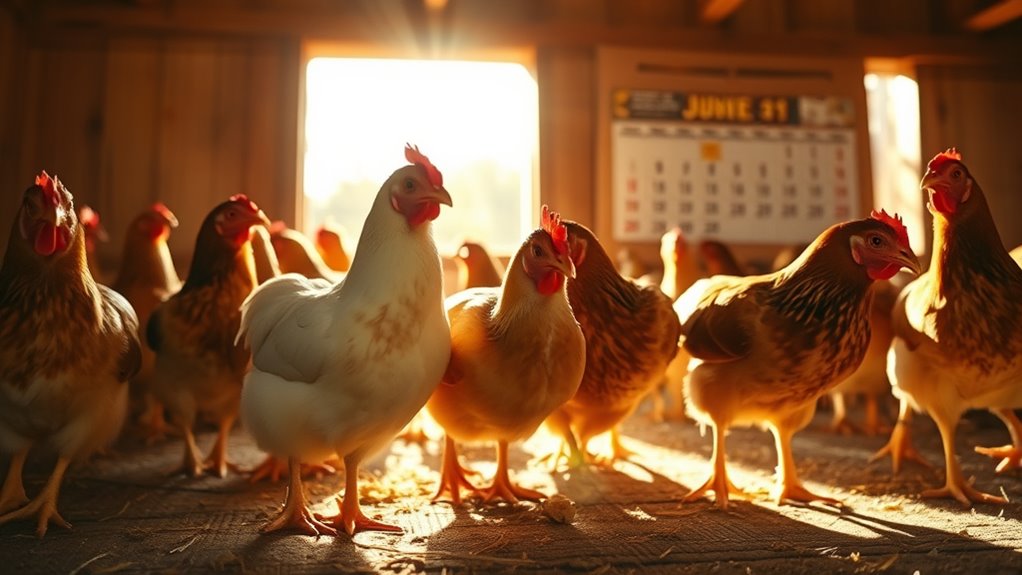
Since chickens rely heavily on daylight to regulate their laying cycles, you’ll notice they usually need at least 14 hours of light to start producing eggs consistently. Daylight directly influences their starting age for egg production; as natural daylight increases in spring, hens often begin laying earlier. Seasonal changes impact their laying cycle, with shorter days in fall and winter causing delays or reductions in egg production.
To counter this, many keepers use artificial light to extend light exposure to about 16 hours, ensuring hens maintain regular laying cycles year-round. By managing light exposure effectively, you can help your chickens start laying on time and keep their egg production steady despite seasonal fluctuations. Understanding this relationship is key to successful poultry care.
Signs Your Hen Is About to Lay Eggs
You’ll notice your hen’s comb and wattles become bright red and swollen when she’s getting ready to lay eggs. She’ll start spending more time in the nesting box, testing it out and settling in.
Pay attention to these physical signs and changes in behavior—they’re clear signals that egg-laying is just around the corner.
Physical Signs Of Readiness
When your hen’s comb and wattles swell and turn a bright red, it’s a clear sign she’s nearing laying age. This vibrant coloration reflects hormonal changes signaling her readiness. Alongside these physical signs, watch for other indicators:
- Comb and Wattles: Enlarged and more colorful, showing increased blood flow tied to egg production.
- Feathers: Her plumage may appear sleeker as hormonal shifts prepare her body for laying.
- Nesting Behavior: She’ll start exploring or sitting in nesting boxes, testing potential egg sites.
These physical cues combine with subtle behavioral shifts, signaling your hen is on the brink of laying eggs. Paying attention to these signs helps you anticipate and support her as she begins this new stage.
Behavioral Changes Observed
Along with physical changes like bright red combs and wattles, hens exhibit noticeable shifts in behavior as they get ready to lay eggs. You’ll observe nesting behavior increase, with your hen frequently exploring nesting areas and testing out nesting boxes. These behavioral changes often signal early laying readiness.
Vocalizations, such as egg songs or heightened squawking, become more common as your hen prepares for her first egg. Physical signs like swollen, vibrant combs and wattles accompany these behaviors, showing hormonal changes. Additionally, an increased appetite often appears as the hen gears up for egg production.
Nesting Box Activity
As your hen gets closer to laying her first egg, you’ll notice her spending more time in the nesting box, often sitting quietly for extended periods. This increased nesting behavior is a clear sign of her readiness to lay. Watch for these key hen activities that indicate laying signs:
- Frequent visits and exploration of the nest box, showing her interest in a safe place for her first egg.
- Development of a bright red comb and wattles, signaling physical readiness.
- Squatting when approached, a behavioral cue that she’s about to lay.
You might also find false eggs or golf balls in the nest box, which encourage her to start laying there. Keeping an eye on these signs helps you anticipate when your hen will lay her first egg.
How Nutrition Can Encourage Early Egg Laying
Though genetics play a key role, you can encourage your chickens to start laying eggs earlier by providing ideal nutrition. A protein-rich diet, with at least 20-24% protein, supports early development and boosts egg production. Including calcium supplements, like oyster shells or crushed eggshells from 16 weeks, strengthens eggshells and promotes early laying.
Maintaining a balanced diet rich in essential vitamins and minerals reduces delays in laying onset and supports overall hen health. You can also offer protein-packed treats such as mealworms to increase energy levels, further encouraging early egg laying.
Consistently supplying quality feed and proper nutrition helps your hens reach laying age sooner and lay more regularly, ensuring a healthy and productive flock.
How to Prepare Nest Boxes to Encourage Egg Laying
When you prepare nest boxes thoughtfully, you create a comfortable space that encourages hens to lay eggs regularly. To encourage laying, follow these key steps in your coop:
- Provide several clean, cozy nesting boxes—about one 1-foot square per four hens—lined with straw or shavings for comfort.
- Place nesting boxes in a dark, quiet corner of the coop to ensure privacy and reduce stress, helping hens feel safe while laying.
- Keep boxes uniform in appearance and position them slightly higher than roosts to discourage sleeping in them and promote consistent use.
How Seasonal Changes Affect When Chickens Start Laying Eggs
Preparing comfortable nest boxes sets the stage for hens to lay eggs, but the timing of their first eggs depends heavily on seasonal changes. Chickens usually begin egg-laying when they experience 14 to 16 hours of daylight daily.
As daylight shortens in fall and winter, you’ll notice seasonal delays in hen maturation and egg production. Some hens may even stop laying or become broody hens, pausing their laying cycle. Molting periods, often linked to these seasonal changes, further contribute to breaks in egg-laying.
To counteract this, you can provide supplemental lighting to extend light hours, encouraging earlier and more consistent egg-laying despite natural daylight reduction. Keep in mind that breed, temperature, and stress also influence how seasonal changes affect your flock’s laying schedule.
Frequently Asked Questions
Can You Eat the First Eggs Laid by Chickens?
Yes, you can eat the first eggs your hens lay. They might be smaller or have thinner shells, but they’re safe.
As your chickens mature, their eggs will become more consistent and higher quality.
How Do You Know Chickens Are Ready to Lay Eggs?
You’ll notice your hen’s comb turning bright red and plump, like a ripe cherry. She’ll squat when you approach.
These signs mean she’s gearing up to lay eggs soon—her body’s telling you she’s ready.
Do 4 Month Old Chickens Lay Eggs?
Four-month-old chickens rarely lay eggs since they’re usually still growing. Some lighter breeds might start early, but most won’t produce eggs yet.
You’ll want to wait a bit longer for consistent laying to begin.
How Old Is a Chicken When It Lays Its First Egg?
You’ll find a chicken lays its first egg around 18 to 22 weeks old. That means by about 5 months, your hen starts laying, though factors like breed and environment can shift this slightly.
Conclusion
Just like the first light of dawn signals a new day, your hens will let you know when they’re ready to start laying eggs. Keep an eye on their signs, provide good nutrition, and create cozy nest boxes to welcome their arrival.
Remember, patience and care are the gentle winds that help your flock bloom. Soon enough, you’ll be gathering fresh eggs, a daily treasure born from your nurturing hands.
Understanding how old chickens are when they start to lay eggs helps you prepare for this exciting stage. With proper care and attention, your hens will begin laying eggs at the right age, ensuring a steady supply of fresh eggs for your home.