How Many Oz Is One Egg White?
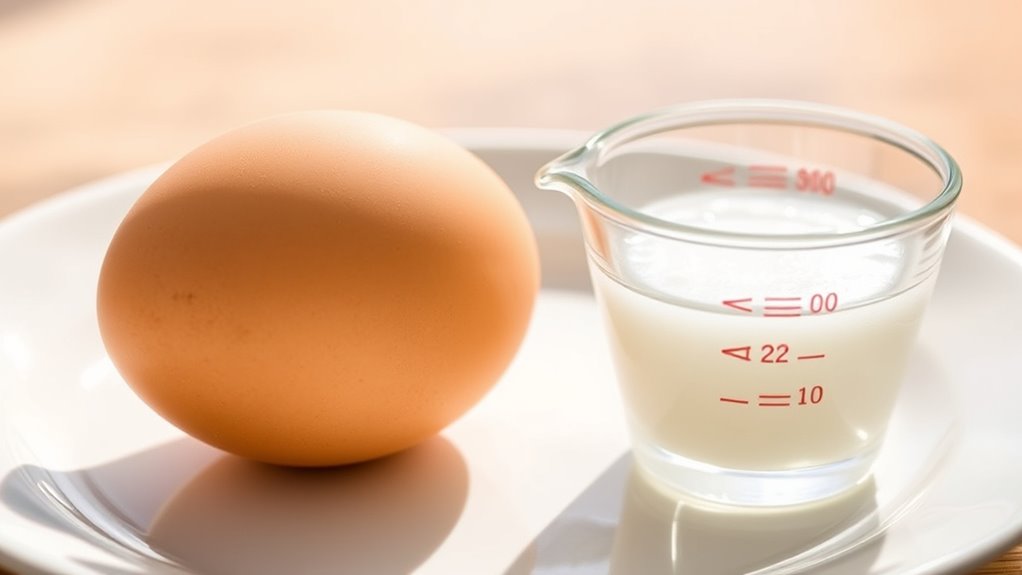
One large egg white typically weighs about 1.25 ounces, making it easy for you to measure when cooking or baking. Understanding how many ounces is one egg white can help you get precise measurements in your kitchen.
If you’re using medium or extra-large eggs, the weight might range from around 1 to 1.3 ounces.
You can weigh whites on a kitchen scale or estimate volume, with one large white roughly equal to 2 tablespoons.
Getting this right ensures your recipes will turn out perfectly. Keep exploring, and you’ll discover tips to measure with even greater accuracy.
What Is the Weight of One Egg White in Ounces?
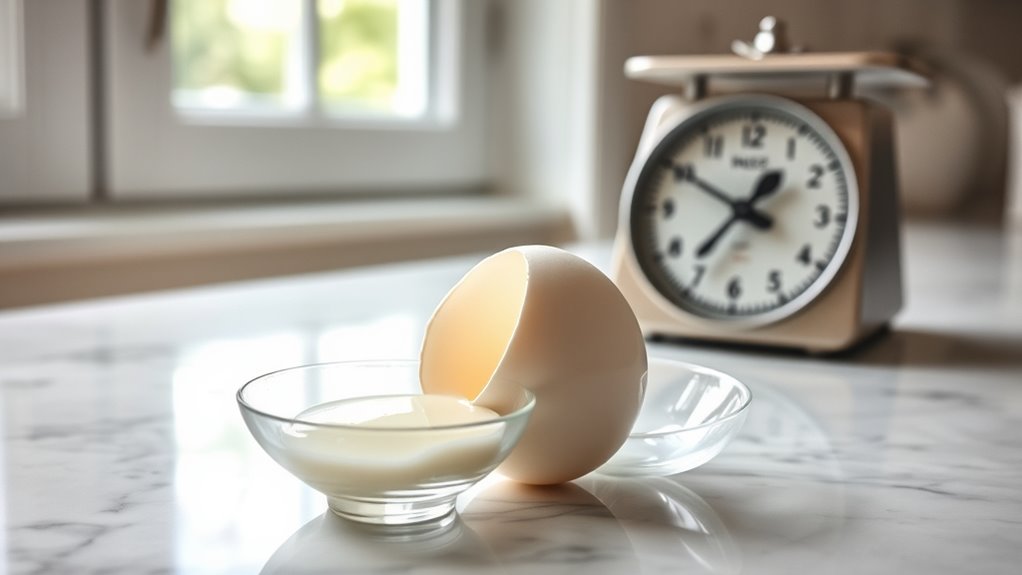
One large egg white typically weighs about 1.25 ounces, though the exact amount can vary depending on the egg’s size. When you measure egg whites, you’ll find their weight usually ranges from around 1.2 ounces for a large egg.
Smaller eggs have lighter egg whites, generally between 0.75 and 1 ounce, while extra-large eggs can have egg whites weighing up to 1.5 ounces. Keep in mind, the weight of egg whites is roughly half the total weight of the entire egg, which averages about 2 ounces.
If you need precise measurements for your recipe, using a kitchen scale to weigh egg whites in ounces is your best bet for accuracy and consistency.
How Egg Size Affects Egg White Weight
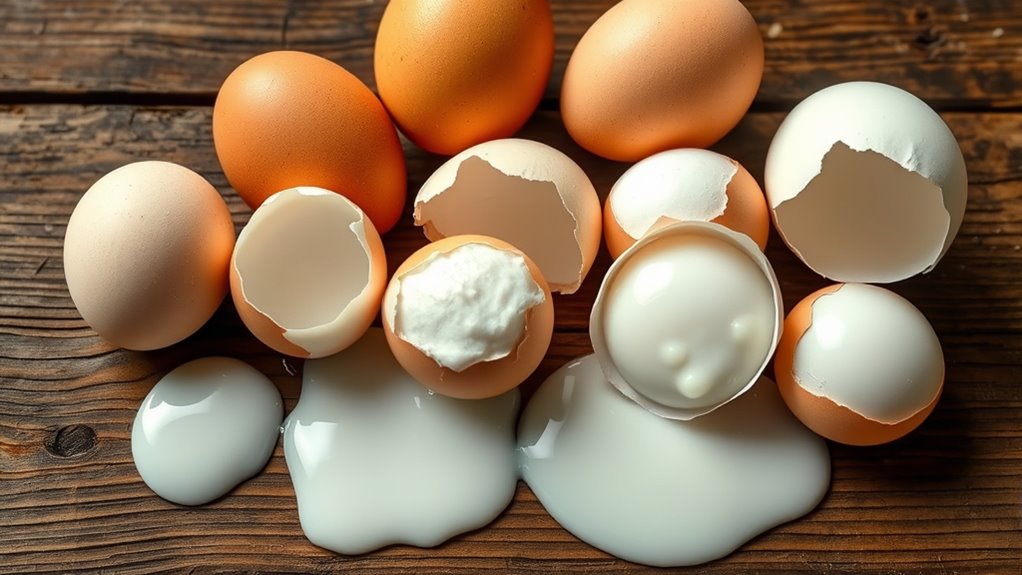
Although egg whites vary in weight, the size of the egg plays a key role regarding how much white you get. When you crack open a large egg, expect about 1.2 to 1.25 ounces of egg white. If you use an extra-large egg, you’ll get slightly more, around 1.3 ounces.
Medium eggs provide roughly 1 ounce of egg white, while smaller eggs, like small or peewee, deliver less—about 0.75 ounces or even less. Understanding this helps you adjust recipes that call for egg whites in terms of service or weight.
How to Measure Egg Whites: Understanding Volume and Weight
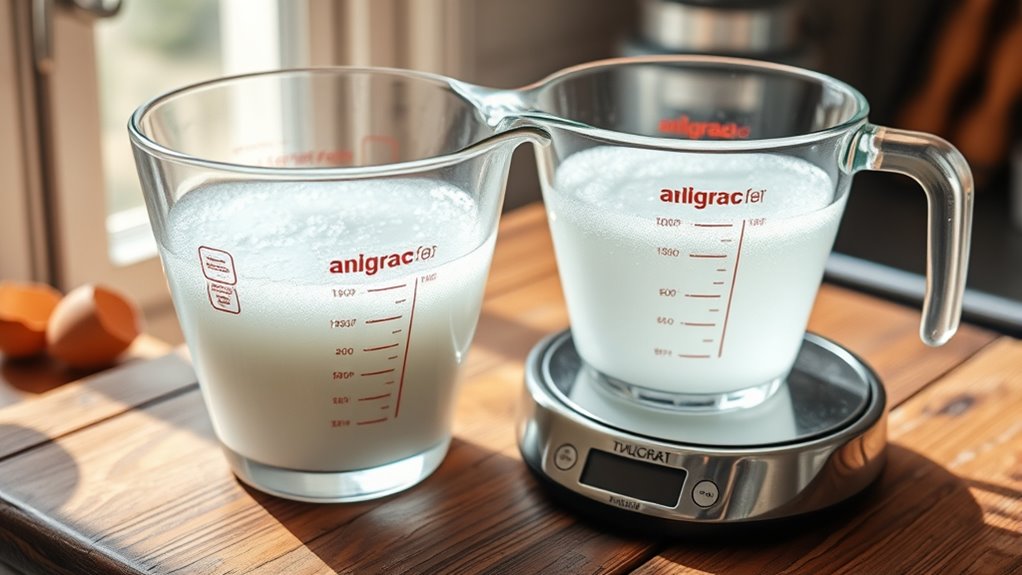
When you need to measure egg whites accurately, choosing between volume and weight can make a big difference in your cooking results. One large egg white weighs about 1.25 ounces (36 grams), and using a kitchen scale is the most precise method to measure it.
If you don’t have a scale, measuring by volume works too—1 egg white equals roughly 2 tablespoons. Keep in mind, 3 to 4 large egg whites typically fill 1/2 cup.
Whether you weigh or measure by volume, getting this right guarantees your recipes turn out consistent, especially in baking where precision matters. So, pick the method that suits your tools and recipe needs to achieve the best outcome every time.
Converting Egg Whites From Count to Ounces
Wondering how to convert egg whites from count to ounces for your recipe? It’s simple! One large egg white weighs about 1.25 ounces. To get the total weight in ounces, just multiply the number of egg whites by 1.25.
This method guarantees your recipes come out perfectly every time.
Here’s a quick conversion table to help:
| Number of Egg Whites | Weight in Ounces |
|---|---|
| 1 | 1.25 |
| 2 | 2.5 |
| 3 | 3.75 |
Keep in mind, weights can vary slightly depending on egg size, but 1.25 ounces is a reliable standard to use in most cooking and baking situations.
Tips for Accurately Measuring Egg White Weight at Home
To get the most accurate measurement, use a kitchen scale instead of relying on volume measurements. Make sure to separate your egg whites carefully, either with an egg separator or the eggshell method, to avoid yolk contamination.
Whisking the whites before weighing can also help you portion them evenly.
Using Kitchen Scales
Although measuring egg whites by volume can be tricky, using a kitchen scale gives you precise control over the amount you need. Start by cracking the egg into a small bowl, then place the bowl on a digital kitchen scale set to zero. This guarantees you’re measuring only the egg white’s weight.
A large egg white typically weighs about 1.25 ounces (36 grams), so if you need less, simply divide the weight accordingly. Using a scale is especially helpful for baking, where accuracy matters. By weighing egg whites, you avoid guesswork and get consistent results every time.
This method is straightforward, saves time, and improves your recipe’s success rate by providing exact measurements for your cooking or baking needs.
Volume Vs Weight
When you measure egg whites by volume, you risk inaccuracies caused by air bubbles and varying egg sizes. These factors make volume measurements less reliable, especially when baking demands precision. Instead, weigh your egg whites for consistent results.
One large egg white usually weighs about 1.25 ounces (35 grams). To do this, crack the egg, whisk the white lightly to combine any separated parts, then place it on a digital kitchen scale. Measuring by weight eliminates guesswork and ensures your recipe turns out just right every time.
Using grams or ounces lets you adjust quantities confidently, avoiding the pitfalls of volume measurements. So, for accuracy, always opt for weight over volume when measuring egg whites at home.
Separating Whites Precisely
If you want to measure egg whites accurately, start by cracking the egg into a small bowl and whisking it lightly. This ensures even consistency and easier measurement. Then, use these steps to separate and measure precisely:
- Place a kitchen scale on a flat surface and zero it with the empty bowl.
- Pour the whisked egg white into the bowl slowly, watching the scale.
- Remember, one large egg white weighs about 1.25 ounces (36 grams).
- If you need less, divide the whisked white accordingly—half an egg white is roughly 0.6 ounces (17 grams).
Always weigh egg whites rather than using volume measurements to get the most accurate results in your recipes.
Common Egg White Substitutions and Their Weights
If you don’t have egg whites on hand, you can use whole eggs but adjust the weight since a large egg white weighs about 1.25 ounces.
Two large eggs typically provide around 2.5 ounces of egg whites, which equals roughly three egg whites.
Keep these weight equivalents in mind to maintain accuracy in your recipes.
Egg White Weight Equivalents
One large egg white typically weighs about 1.2 ounces (34 grams), making it easy to substitute in recipes once you know the equivalents. When you need to swap or measure egg whites, keep these weight equivalents in mind:
- Two large egg whites equal the white content of one whole large egg, about 2 ounces.
- One large egg white is roughly 3 tablespoons or 1.5 fluid ounces by volume.
- For baking accuracy, weigh one large egg white as approximately 1.25 ounces.
- Four to five egg whites weigh between 5 to 6 ounces, depending on size.
Knowing these equivalents helps you adjust recipes precisely, whether you’re scaling up or replacing whole eggs with whites only.
Whole Egg Substitution Tips
Understanding the weight of egg whites helps you make accurate substitutions when whole eggs aren’t an option. A large egg white weighs about 1.25 ounces (36 grams), so when a recipe calls for egg whites, you can use whole eggs carefully.
Since one whole large egg weighs around 2 ounces, including yolk and white, you’ll want to keep in mind that a single egg white is roughly 60% of a whole egg’s weight. If you need two egg whites, using two whole eggs gives you about 4 ounces, which is more than needed, so consider adjusting accordingly.
For the best results, weigh the eggs and separate the whites, then measure the amount in ounces to match the recipe’s requirements precisely.
Why Accurate Egg White Measurements Matter in Baking
Because egg whites play a crucial role in the texture and structure of baked goods like meringues and soufflés, measuring them accurately is essential for your success. One large egg white weighs about 1.25 ounces (35 grams), and knowing this helps you avoid common baking pitfalls.
Here’s why you should measure precisely:
- Ensures proper leavening, so your treats rise perfectly.
- Maintains the right structure and texture for delicate recipes.
- Helps you adjust recipes accurately when scaling or substituting.
- Prevents failures caused by too much or too little egg white.
Using a kitchen scale for egg whites guarantees consistency in every batch, giving you reliable, delicious results every time you bake.
Frequently Asked Questions
How Much Is 1 Egg White in Liquid?
One egg white in liquid form is about 1 ounce or 28 grams. You can expect it to measure roughly 2 to 3 tablespoons, though slight variations depend on the egg’s size and freshness.
How Much Do 1 Egg White Weigh?
One egg white weighs about 1.25 ounces, but it can fluctuate slightly depending on the egg size.
When you bake or cook, weighing it guarantees you get consistent results every time.
How Many Egg Whites Is 12OZ?
Imagine pouring smooth, translucent egg whites into a bowl—you’ll need about 9 to 10 large egg whites to reach 12 ounces.
Use a kitchen scale to measure and avoid guessing.
How Much Is 2 Egg Whites?
Two egg whites weigh about 2.5 ounces. If you’re measuring for cooking, you can round that to 2 ounces in volume.
Just remember, for precise baking, a kitchen scale is your best friend.
Conclusion
Now that you know one egg white typically weighs about 1 ounce, why guess when precision can elevate your recipes? Whether you’re baking or cooking, measuring egg whites accurately guarantees consistent results every time.
Remember, egg size can vary, so weighing or measuring volume helps you get it just right. Don’t overlook these small details—they make a big difference in the kitchen.
Ready to perfect your dishes with confidence? Understanding how many oz is one egg white is key to achieving the best texture and flavor in your culinary creations.