
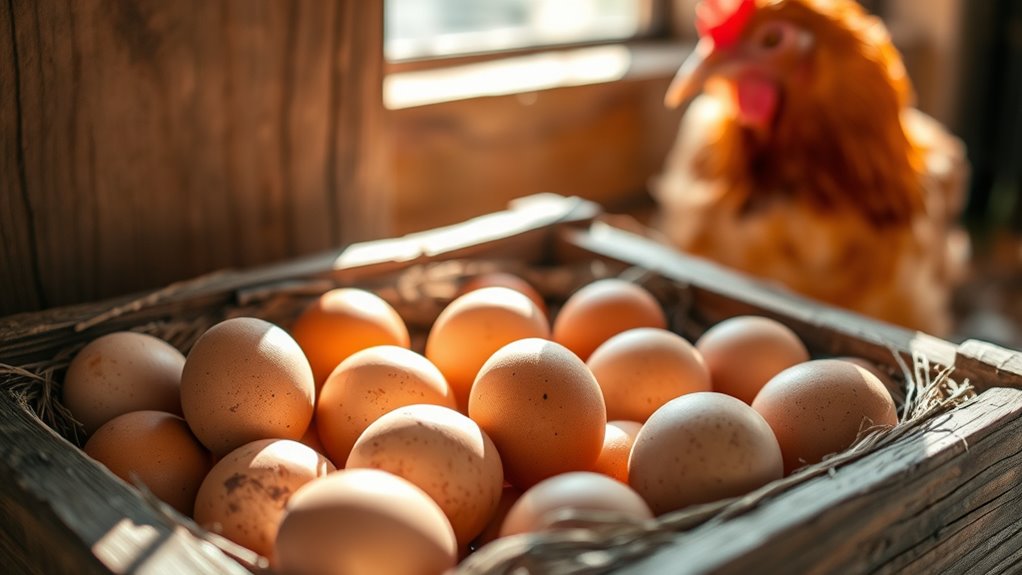
How Many Eggs Will a Chicken Lay in a Week?
You can expect a healthy chicken to lay about 4 to 7 eggs each week, depending on its breed, age, and care. Younger hens and high-yield breeds like White Leghorns often produce eggs daily at peak times, while older hens lay fewer.
Factors like diet, lighting, and weather also play a role in weekly egg counts.
If you want to optimize your flock’s laying and tackle common challenges, there’s plenty more to discover. Understanding how many eggs a chicken will lay in a week is just the start of managing a productive and happy flock.
How Many Eggs Does One Chicken Lay in a Week?
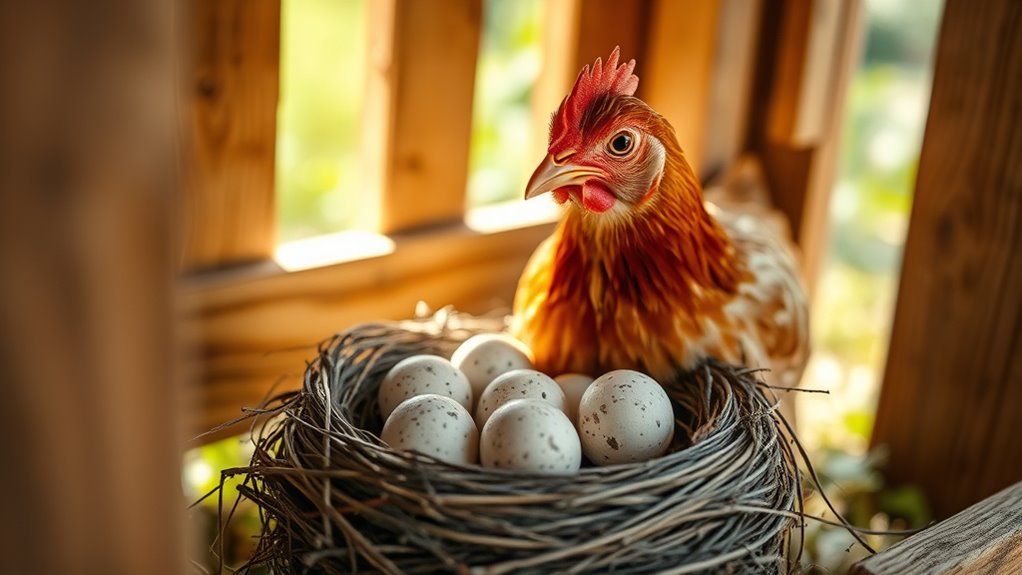
Wondering how many eggs one chicken lays in a week? On average, a healthy hen lays about 5 to 6 eggs weekly, though this varies by breed and age. Hens like White Leghorns, known for high egg production, typically lay one egg every 24 to 26 hours during their peak season.
Younger hens tend to lay more consistently, while older ones see a decline in their laying frequency. Environmental factors such as daylight hours, temperature, and diet also play a big role in how many eggs a hen produces. Generally, you can expect a hen’s laying cycle to yield between 4 and 7 eggs per week.
Keeping these factors in mind helps you understand what influences your hens’ egg production.
How to Estimate Weekly Egg Production for Your Flock Size
To estimate your flock’s weekly egg production, start by calculating the average eggs laid per hen. Then, adjust your numbers based on seasonal changes and the hens’ ages, as both can impact output.
Calculating Eggs Per Hen
How many eggs can you expect from your hens each week? On average, hens lay about 5 to 6 eggs per week, depending on their breed and age. To calculate eggs for your flock, first determine the average eggs per hen by considering that most hens produce roughly one egg every 1.5 to 2 days.
Once you know the average eggs per hen, multiply that by the total number of hens you have. This simple formula—(number of hens) x (average eggs per hen per week)—helps you estimate your total weekly egg production accurately. By regularly tracking these numbers, you can manage your expectations and plan accordingly for your flock’s output without surprises.
Adjusting For Seasonal Factors
Although hens generally lay 5 to 6 eggs per week, seasonal changes can considerably impact their output. Shorter light hours in fall and winter can reduce egg production by 30-50%. To maintain steady weekly egg production, you can provide supplemental lighting that extends daylight to 14-16 hours.
When estimating, make adjustments by reducing expected eggs by 20-30% during low-light seasons if you don’t use artificial light. Monitoring your flock’s actual egg output throughout the year helps you refine these adjustments for better accuracy.
Accounting For Hen Age
Since egg production changes as hens age, you’ll need to adjust your estimates based on their age groups. Younger hens, typically in their first or second year, lay around 5-6 eggs per week. After the first year, egg production drops about 20% annually, so older hens produce fewer weekly eggs.
To estimate your flock’s total, multiply the number of hens in each age group by their average weekly egg production, then add the results.
| Hen Age | Avg. Weekly Eggs per Hen |
|---|---|
| 1st – 2nd Year | 5.5 |
| 3rd Year | 4.4 |
| 4th Year+ | 3.5 |
Adjust for older hens accordingly to get a precise egg production estimate.
Which Chicken Breeds Lay the Most Eggs Per Week?
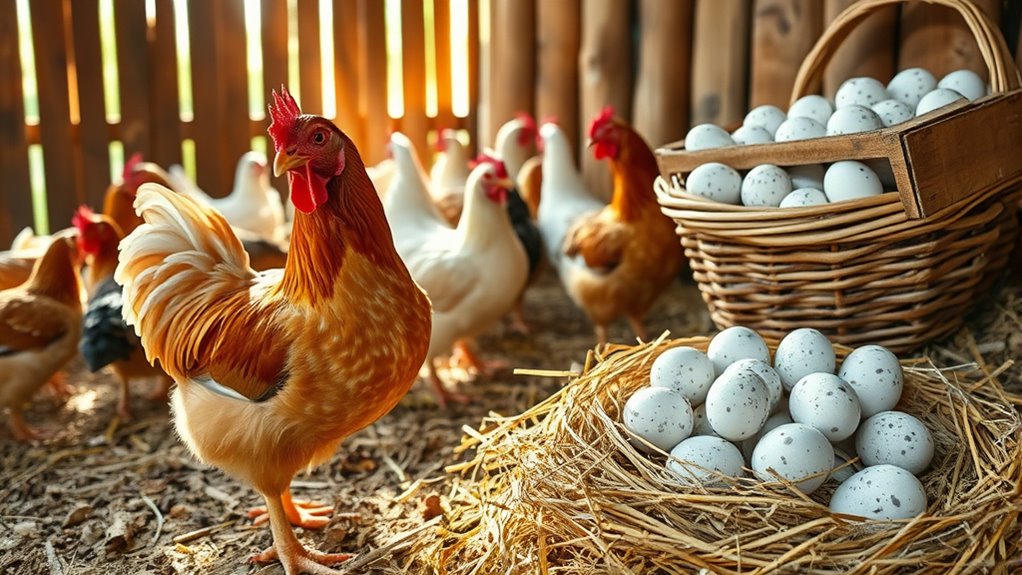
When you’re aiming to maximize egg production, choosing the right chicken breed makes all the difference. Some of the best good layers include White Leghorns and ISA Browns, both typically producing 5-6 eggs per week. Hybrid breeds, engineered through selective breed genetics, can lay up to 7 eggs weekly during their peak production years.
These breeds are specifically designed for high egg output, making them ideal if quantity matters most. While breed choice sets the foundation, remember that peak production usually occurs within the first 1-2 years of a hen’s life. Selecting breeds known for consistent, high weekly egg production guarantees you get the most from your flock without compromising quality or health.
How Do Age, Health, and Molting Affect Egg Production?
Understanding how age, health, and molting influence your hens’ egg production can help you manage your flock more effectively. Younger hens lay the most eggs, but as they age, egg production drops about 20% yearly after their first year.
Health problems like illness or parasites drastically reduce egg output. Molting causes a temporary pause in egg production, lasting 4-8 weeks, as hens shed and regrow feathers.
| Factor | Effect on Egg Production |
|---|---|
| Age | Decreases ~20% each year |
| Health | Illness/stress lowers output |
| Molting | Stops egg laying 4-8 weeks |
| Nutrition | Supports quicker recovery |
How Do Environmental Factors Influence Weekly Egg Laying?
Age, health, and molting set the baseline for how many eggs your hens can lay, but environmental factors often dictate how consistently they produce throughout the week. Shorter daylight hours in winter can reduce egg production by up to 30-50%, so your hens lay fewer eggs during those months.
Weather changes, like sudden storms or cold snaps, cause environmental stress that lowers laying rates. High temperatures above 85°F (29°C) trigger heat stress, further decreasing egg production. To keep your hens laying steadily, provide adequate fresh water and ensure proper ventilation to minimize environmental stress.
How Does Nutrition Affect Egg Production Each Week?
Since your hens rely on proper nutrition to fuel egg production, providing a balanced diet rich in protein, calcium, and essential vitamins is crucial for maximizing how many eggs they lay each week. Deficiencies in key nutrients like vitamin D and amino acids can reduce egg production.
Offering high-quality layer feed and calcium supplements, such as oyster shells, supports shell strength and consistent laying. During molting or stress, enhanced nutrition helps maintain egg output.
| Nutrient | Role in Egg Production | Source Examples |
|---|---|---|
| Protein | Supports egg formation | Soybean meal, fishmeal |
| Calcium | Ensures strong shells | Oyster shells, limestone |
| Vitamin D | Aids calcium absorption | Sunlight, fortified feed |
| Amino Acids | Builds egg proteins | Corn, legumes |
| Minerals | Overall hen health | Trace mineral mix |
Why Does Egg Production Vary by Season and How Can You Manage It?
Although chickens can lay eggs year-round, their production often drops during certain seasons due to changes in daylight and temperature. Seasonal variation plays a big role in egg production, especially in winter when shorter light hours reduce laying by about 20%.
You can manage this by providing supplemental lighting to guarantee hens get 14-16 hours of light daily, which helps maintain steady egg output. Additionally, molting in fall temporarily halts egg production as hens shed feathers.
Hot weather also stresses chickens, so offering shade and proper ventilation is vital. Effective management includes adjusting light hours, controlling temperature, and maintaining good nutrition.
How Can You Boost Your Chickens’ Weekly Egg Laying?
If you want to boost your chickens’ weekly egg laying, focus on creating ideal conditions that support their natural reproductive cycles. Providing 14-18 hours of light daily encourages laying hens to produce about an egg a day. Feed them high-quality layer feed and offer calcium supplements to improve shell strength.
Keep their environment clean and stress-free with proper ventilation and fresh water access. Choosing high-yield breeds like White Leghorns also helps increase output.
| Factor | Recommendation | Benefit |
|---|---|---|
| Hours of Light | 14-18 hours/day | Stimulates egg production |
| Feed Quality | Nutrient-rich layer feed | Supports hen health |
| Environment | Clean, ventilated | Reduces stress, boosts laying |
| Breed Selection | White Leghorns, ISA Browns | Higher weekly egg yield |
Common Challenges That Affect Weekly Egg Production and Solutions
While providing ideal conditions can boost your chickens’ egg production, several common challenges can still impact their weekly output. Stress from overcrowded or poorly ventilated coops, along with poor nutrition, can reduce egg laying by up to 30%.
Molting and seasonal changes often cause hens to temporarily stop laying, lowering your weekly egg count. Sick or injured chickens also lay fewer eggs, sometimes cutting production in half until their health improves.
To combat these issues, ensure your coop is spacious and well-ventilated, provide a balanced diet rich in necessary nutrients, and monitor your flock’s health regularly. Addressing stress and nutrition promptly will help maintain steady egg production, even during molting or seasonal shifts.
Frequently Asked Questions
How Many Eggs Will 4 Chickens Lay in a Week?
You can expect four chickens to lay around 24 to 28 eggs weekly if conditions are good.
Keep their nutrition, lighting, and stress low to maximize their egg production through the week.
What Is the 90/10 Rule for Chickens?
You’ll find the 90/10 rule means 90% of eggs come from just 10% of hens—those superstar layers!
Focus on them, and you’ll boost your flock’s output like a pro, leaving others in the dust!
Can You Eat Eggs Right After They Are Laid?
Yes, you can eat eggs right after they’re laid since they have a natural protective coating.
Just make sure they’re clean or wash them if needed, and enjoy them fresh or refrigerate for longer storage.
What Do Chickens Do Right Before They Lay an Egg?
You’ll swear a chicken’s about to perform a magic trick when it squats low, gets restless, and seeks its nest!
Watch for brighter combs and quieter moves—they’re all signs she’s moments from laying an egg.
Conclusion
You might think your chickens won’t lay consistently every week, but with the right care, you’ll see steady eggs in your basket. Imagine gathering fresh, warm eggs each morning, knowing you’ve provided good nutrition, a comfortable environment, and proper health care.
By understanding factors like breed, age, and season, you can keep your flock productive and enjoy a reliable weekly supply, even when challenges pop up.
Your efforts truly pay off! With proper management, you’ll find how many eggs a chicken will lay in a week can meet or even exceed your expectations.