
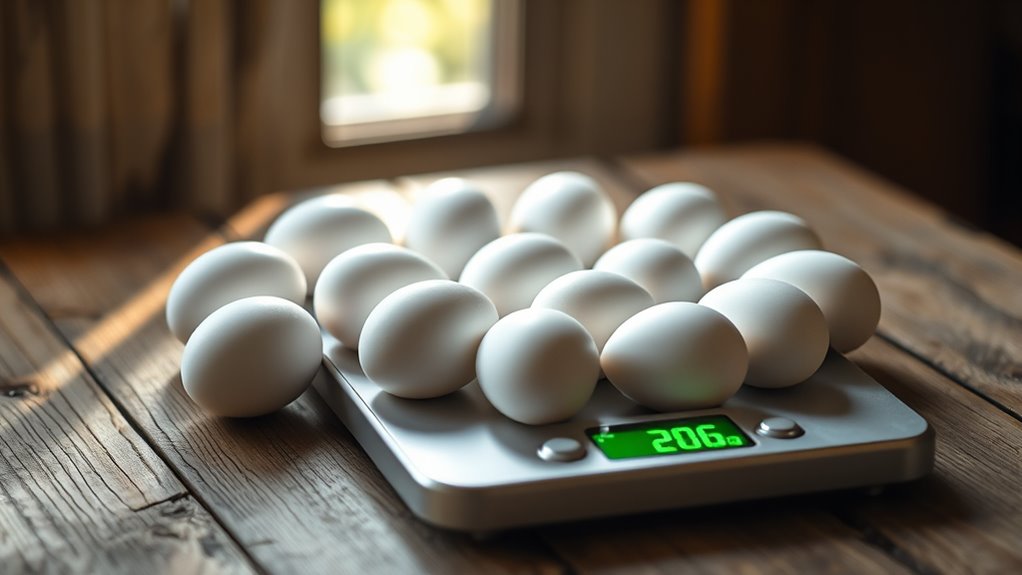
How Many Eggs Have 20 Grams of Protein
You’ll need about three large eggs to get 20 grams of protein since each egg contains roughly 6 grams. Whole eggs offer complete protein, meaning they have all the essential amino acids your body needs.
If you want, you can use egg whites for protein with fewer calories, but whole eggs provide added nutrients like healthy fats and vitamins.
Keep going, and you’ll find out how combining eggs with other foods can improve your protein intake even more.
Protein Content in a Single Egg

A large egg contains about 6 grams of protein, making it a convenient source for your daily intake. When you crack open an egg, most of the protein comes from the egg white, which offers around 3.6 grams. The yolk adds roughly 2.7 grams of protein, so both parts are important if you want the full benefit.
This balance means eggs provide a complete protein source with all essential amino acids your body needs. Including eggs in your meals can help you meet your protein requirements efficiently, especially if you’re aiming to build muscle or maintain a healthy diet. Understanding the protein content in a single egg helps you plan your nutrition better and appreciate its value as a protein-rich food.
How Many Eggs Equal 20 Grams of Protein?
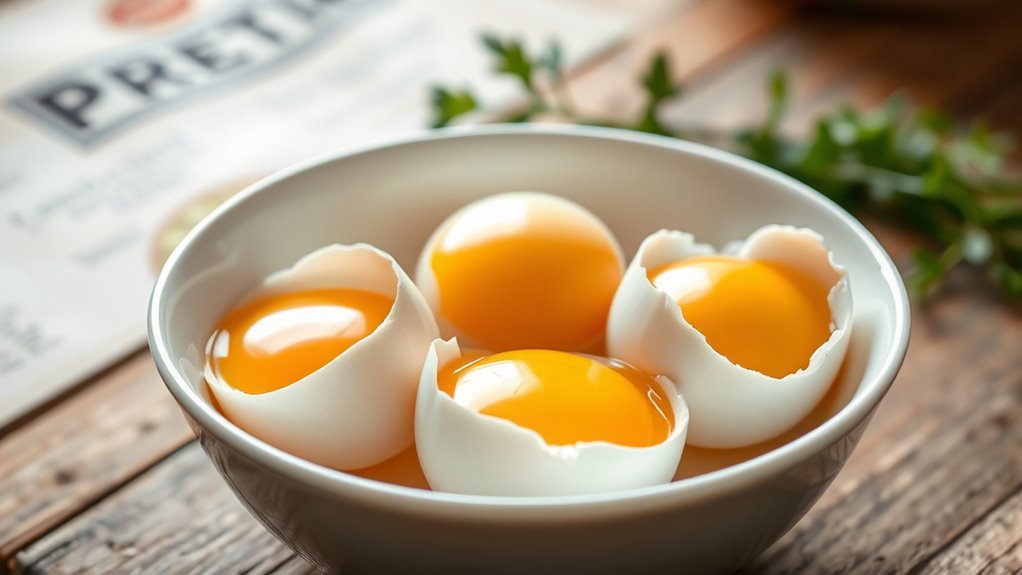
Wondering how many eggs you need to hit 20 grams of protein? Since one large egg contains about 6 grams of protein, you’ll need roughly 3 to 4 eggs to reach that target. More precisely, 3.3 eggs equal 20 grams of protein based on the average protein per egg.
Eating 3 eggs gets you close, around 18 grams of protein, just a bit shy of 20 grams. Keep in mind, protein per egg can vary slightly with size, but large eggs are the standard reference. So, when asking how many eggs equal 20 grams of protein, aim for about 3 to 4 large eggs to meet your protein needs efficiently without overdoing it.
Whole Eggs vs. Egg Whites: Protein, Calories, and Benefits

Although whole eggs contain about 6 grams of protein each, egg whites pack a higher protein punch per calorie, offering roughly 3.6 grams of protein with minimal fat and calories. To get enough protein, you might wonder which to choose. Here’s a quick comparison:
Egg whites deliver more protein per calorie, with about 3.6 grams and minimal fat compared to whole eggs.
- Whole eggs provide healthy fats, vitamins, and about 6 grams of protein.
- Egg whites offer nearly pure protein with fewer calories and almost no fat.
- You need about 3 to 4 whole eggs to hit 20 grams of protein.
- Roughly 6 egg whites are required to reach the same 20-gram protein goal.
Balancing whole eggs and egg whites helps you get enough protein while managing calorie and fat intake based on your dietary needs.
How Eggs Can Help You Hit Your Daily Protein Goals
Choosing between whole eggs and egg whites depends on your protein needs, but both can effectively help you reach your daily protein goals. One large egg provides about 6 grams of protein, so eating 3 to 4 eggs easily hits that 20-gram target. This makes eggs a convenient, nutrient-dense option to include in your meals without adding excessive calories a day.
Unlike chicken breast, which also offers high protein, eggs come packed with all essential amino acids, making them a complete protein source. Whether you’re aiming to build muscle or maintain your intake, incorporating eggs ensures you meet your protein goals efficiently.
Combining Eggs With Other Protein Foods for Better Nutrition
When you combine eggs with other protein-rich foods, you can easily boost your overall protein intake and improve the nutritional quality of your meals. Eggs alone provide much protein, but pairing them with other sources maximizes benefits.
Try these combos:
- Add Greek yogurt to your scrambled eggs for a creamy texture and extra protein.
- Include lean meats like chicken or turkey alongside eggs for a complete, high-protein meal.
- Mix eggs with plant-based proteins such as beans or nuts to enhance amino acid variety.
- Serve eggs with fish or legumes to optimize protein quality and overall nutrition.
Frequently Asked Questions
How Many Eggs Equal 20 Grams of Protein?
You’ll need about three large eggs to get 20 grams of protein since each contains roughly 6 grams.
If eggs are smaller or larger, adjust accordingly, but three is a solid estimate for most cases.
What to Eat to Get 20 Grams of Protein?
You can eat three large eggs, half a cup of cooked salmon, one cup of Greek yogurt, or about 1.5 cups of cooked lentils to get 20 grams of protein.
Mix it up for variety!
How Much Protein Is in 2 Eggs a Day?
Two eggs a day give you about 12 grams of protein, covering nearly a quarter of your daily needs.
How Many Eggs Do You Need to Eat to Get 25 Grams of Protein?
You’ll need to eat about 4 large eggs to get close to 25 grams of protein.
If you want exactly 25 grams, add a small protein source like a tablespoon of yogurt alongside those eggs.
Conclusion
If you want to power up like a protein-packed superhero, just know it takes about three large eggs to hit 20 grams of protein—easy, right? Whether you go whole or just whites, eggs are your secret weapon for muscle fuel without the fuss.
Pair them with other protein-rich foods, and you’ll be unstoppable. So, crack those eggs and watch your protein goals get crushed faster than you ever imagined!
Knowing how many eggs have 20 grams of protein helps you plan your meals better. Eggs not only provide quality protein but also essential nutrients, making them a perfect choice for anyone looking to boost their protein intake efficiently.