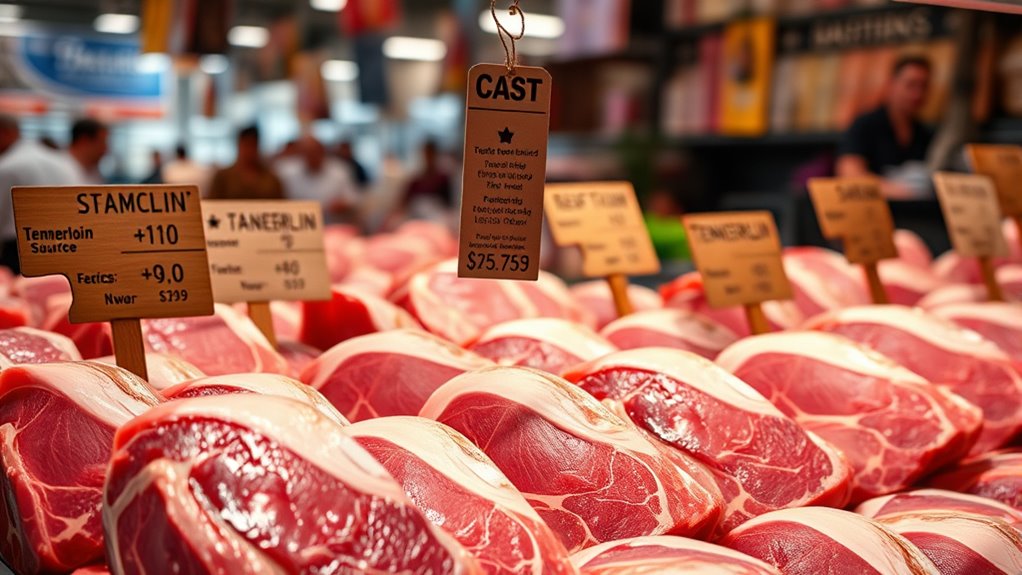
How Much Does Beef Tenderloin Cost: 7 Factors That Affect Price
You’ll find beef tenderloin prices vary widely because you’re paying for rarity, quality grade, breed, feeding methods, aging, region, and season. Beef tenderloin cost is influenced by many factors that affect its final price. Understanding these can help you make smarter purchasing decisions.
Prime grades with top marbling cost more than Choice or Select, while Wagyu or Angus breeds command premium prices. Aging methods like dry aging boost flavor but raise cost too. Prices also spike in urban or holiday seasons.
Knowing where and when to buy can save you money. Keep exploring to uncover all the factors shaping the cost. This knowledge ensures you get the best value for your beef tenderloin purchase.
Why Does Beef Tenderloin Cost So Much?
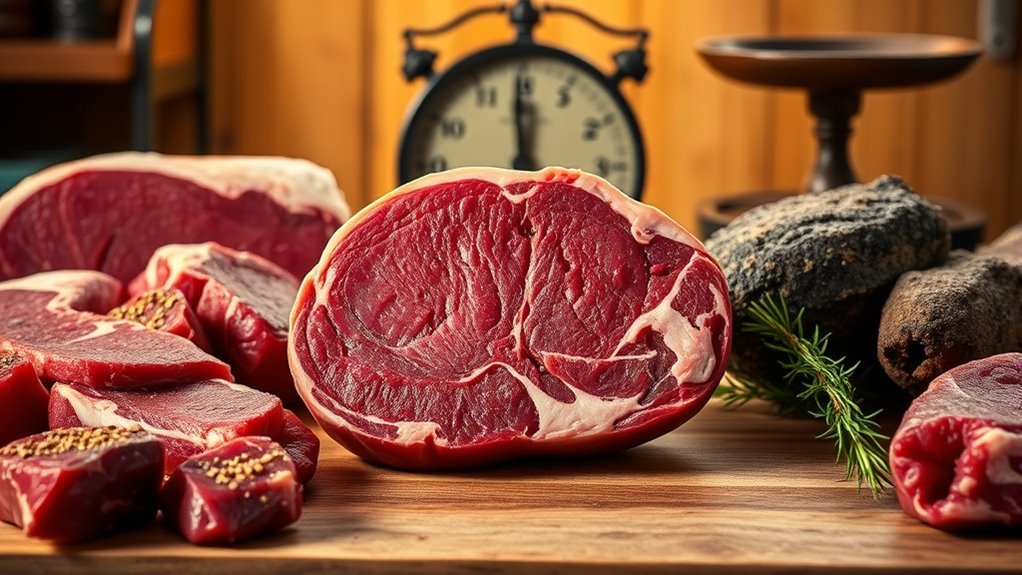
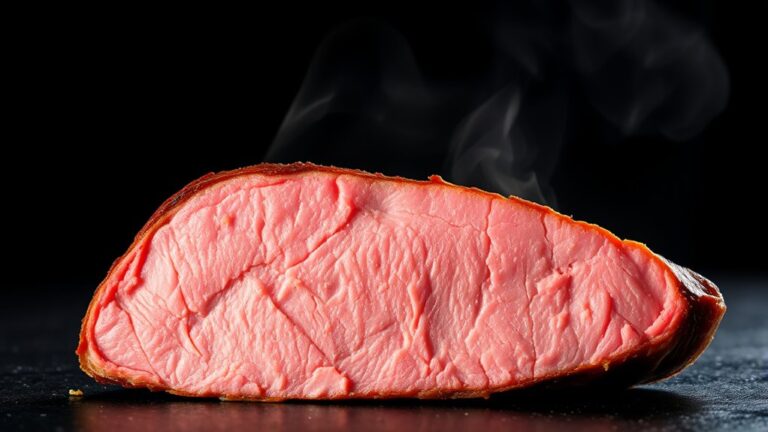
Why does beef tenderloin cost so much? It’s because this cut is incredibly rare, accounting for less than 1% of the entire carcass weight. When you think about beef prices, most cuts of meat are more abundant, but the tenderloin’s exclusive muscle location makes it a luxury cut that’s in high demand.
You’re paying for its unmatched tenderness and premium quality, which few other cuts can match. Plus, factors like the breed of the cattle, their feeding methods, and how the meat is aged all push the price higher.
How Quality Grades Affect Tenderloin Price
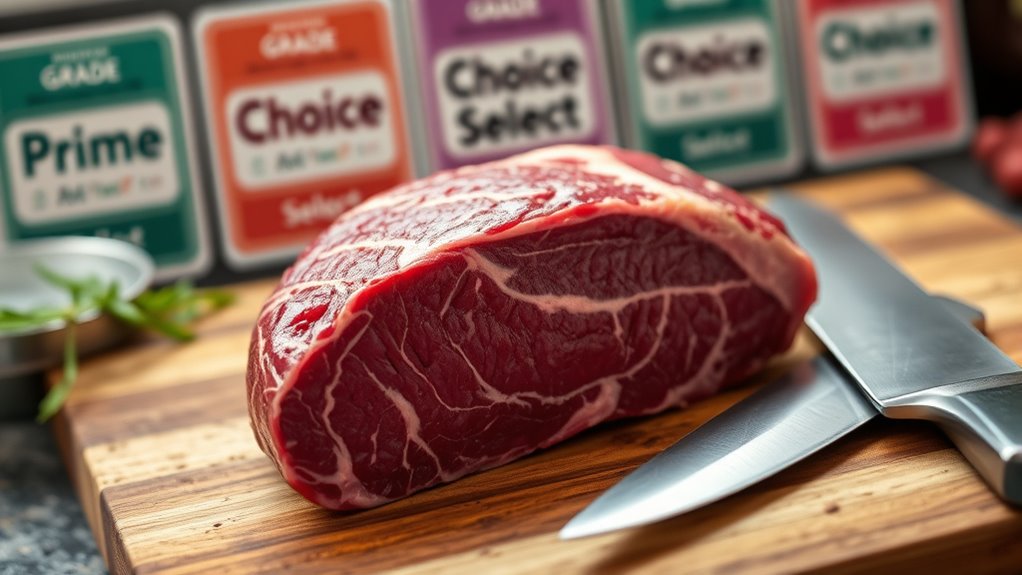
When you choose a beef tenderloin, the USDA grade plays a big role in the price you’ll pay. Higher grades like Prime offer more marbling and tenderness, which means better flavor but also a higher cost.
Expect to pay markedly more for Prime compared to Choice or Select cuts because quality directly impacts the price.
USDA Grade Impact
Understanding USDA grades can help you make smarter choices when buying beef tenderloin. The USDA grade directly affects the marbling and tenderness of the meat, which in turn influences its market price. Prime grade offers the most marbling and commands the highest price, while Choice provides a good balance of quality and cost.
Select is the most affordable but has less marbling and tenderness.
| USDA Grade | Marbling Level | Market Price Impact |
|---|---|---|
| Prime | Highest | 30-50% higher than Choice |
| Choice | Moderate | Moderate pricing |
| Select | Lowest | Most affordable |
Knowing these differences lets you pick the right tenderloin that fits your taste and budget.
Marbling And Tenderness
The marbling in beef tenderloin plays a crucial role in determining both its tenderness and price. When you choose a tenderloin with higher marbling, you get a more tender, flavorful cut. USDA Choice tenderloin offers moderate marbling, which means it delivers good tenderness but at a more affordable price compared to higher grades.
Cuts with increased marbling, like those in Prime or Certified Angus Beef, tend to be softer and juicier, justifying their premium cost. Since marbling directly enhances tenderness, it’s a key factor in how much you’ll pay. So, when you’re shopping, remember that the quality grade and its marbling level will affect the tenderness you experience and the price you’ll see on the tag.
Price Differences By Grade
Because quality grade directly impacts marbling and flavor, tenderloin prices vary considerably. When you choose beef tenderloin, understanding how grade affects cost helps you make the best choice for your budget and taste.
Here’s how grade influences price:
- USDA Prime tenderloin costs $30 to $40 per pound due to superior marbling and tenderness.
- USDA Choice is more affordable, ranging from $20 to $30 per pound, offering good quality.
- Lower grades like Select or ungraded cuts are cheaper but lack the marbling and tenderness of higher grades.
Higher grades, including Certified Angus Beef, often command premium prices, especially in peak seasons. Knowing these price differences lets you select the right tenderloin grade for your needs.
How Breed and Feeding Methods Affect Tenderloin Price
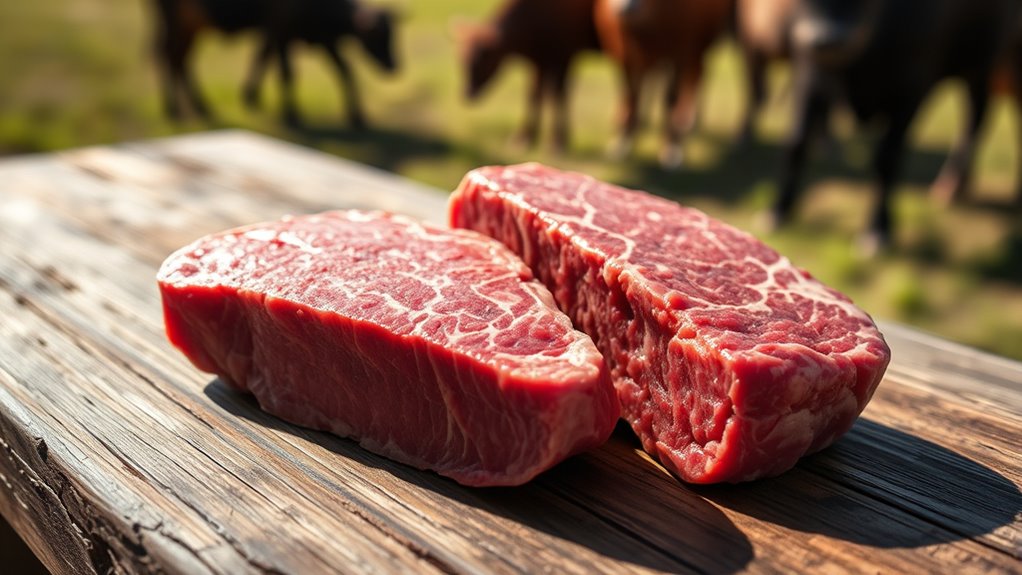
When you choose beef tenderloin, the breed and feeding methods behind it play a big role in the price you pay. Certain breeds like Wagyu and Angus produce more tender, flavorful cuts, which pushes the tenderloin price higher. Wagyu, especially A5 grade, is known for exceptional marbling, making its tenderloin more expensive.
Feeding methods also impact cost considerably. Grass-fed and organic cattle tend to raise the price due to greater feeding and care expenses. Grain-finishing and other specialized feeding methods enhance tenderness and flavor, further increasing tenderloin price.
The rarity of the breed combined with these feeding practices directly influences how much you’ll spend. So, understanding the breed and feeding methods helps you make smarter choices when buying beef tenderloin.
How Aging and Processing Influence Tenderloin Cost
You’ll notice that different aging methods, like wet or dry aging, can substantially affect the price of beef tenderloin. Processing steps such as trimming and packaging also add to the overall cost.
Understanding these factors helps explain why some tenderloin cuts come with a higher price tag.
Aging Methods Impact Price
Although aging methods vary, they play a crucial role in determining the cost of beef tenderloin. You’ll find that how a tenderloin is aged influences its tenderness, flavor, and price. Here’s what you should know:
- Wet aging seals the tenderloin in vacuum packaging for 1 to 4 weeks, enhancing tenderness without adding much cost.
- Dry aging lasts 2 to 6 weeks, drying out the meat to concentrate flavor, which drives up the price due to moisture loss and specialized storage.
- Extended dry aging demands controlled environments and results in weight loss, further increasing cost by 20–50% compared to wet-aged beef.
Choosing between these aging methods means balancing budget and flavor preferences since dry aging raises the price but offers richer taste.
Processing Steps Affect Cost
The aging process sets the stage for beef tenderloin’s quality and cost, but the steps that follow aging also shape the final price. After aging—whether wet or dry—the tenderloin undergoes careful processing, including trimming silver skin, connective tissue, and excess fat. This trimming requires skilled labor, which raises costs.
Dry aging improves flavor and tenderness but causes weight loss through evaporation, meaning you pay more per pound for less meat. Processing also involves special butchering techniques to ensure precise portioning and minimal waste, adding to expenses.
Each stage—from aging through meticulous trimming and handling—increases production costs, which you ultimately see reflected in the retail price. So, when you buy beef tenderloin, remember that processing steps considerably influence its final cost.
Regional and Seasonal Tenderloin Price Trends
When you shop for beef tenderloin, you’ll notice prices vary widely depending on the region and time of year. Regional and seasonal prices often fluctuate due to supply, demand, and local market conditions. Here’s what you should keep in mind:
- Urban centers and coastal areas usually have higher prices than rural markets because of increased demand and shipping costs.
- Seasonal spikes happen during holidays like Christmas and New Year, with prices jumping 20-30%, and colder months can push prices up 10-15% due to higher demand.
- States with strong beef production, like Texas and Nebraska, tend to offer more competitive prices than the Northeast or West Coast.
Understanding these regional and seasonal price trends helps you make smarter purchasing decisions.
Where Should You Buy Beef Tenderloin: Retail or Wholesale?
Regional and seasonal price differences can influence where you decide to buy beef tenderloin. If you buy at a retail store, expect to pay $20 to $40 per pound, depending on the grade. Wholesale prices usually range from $9 to $15 per pound but require buying in bulk.
Here’s a quick comparison:
| Buying Option | Cost per Pound |
|---|---|
| Retail Store | $20 – $40 |
| Wholesale | $9 – $15 |
| Specialty Butcher | Varies (mid-range) |
| Local Farms | Depends on quantity |
Choosing wholesale saves money on cost per pound but suits larger orders. Retail stores offer convenience and smaller quantities but at a higher price due to markups. Your choice depends on how much you need and your budget.
Tips for Getting the Best Value on Beef Tenderloin
Although beef tenderloin can be pricey, you can still find great value by choosing USDA Choice or Prime grades, which offer better marbling and flavor. To get the best price per pound on different cuts of beef, consider these tips:
- Shop around—compare the price per pound at your local grocery store, specialty butchers, and online retailers to find the best deal.
- Buy during off-peak seasons or sales, like after holidays, when prices often drop.
- Opt for smaller or pre-trimmed tenderloins, which usually cost less than whole cuts.
Frequently Asked Questions
What Determines the Price of Beef?
You determine beef price by its quality grade, cut rarity, and market demand. Feed costs, supply changes, and processing expenses also influence it.
During holidays or tough weather, expect prices to rise due to limited availability.
Why Is a Beef Tenderloin so Expensive?
You’re paying for a rare, buttery-soft treasure hidden deep inside the cow—a tiny muscle that’s tender as silk.
Its scarcity and demand, plus premium quality, make beef tenderloin a pricey but unforgettable indulgence.
What Are Two Factors That Affect the Cost per Serving of Meat?
Two factors that affect the cost per serving of meat are its grade, like USDA Prime or Choice, and the cut’s rarity.
You’ll pay more for higher marbling and tender, scarce cuts like Filet Mignon.
What Are the 5 Factors That Determine Beef Quality?
You’re looking for that perfect steak experience, right? The five factors that determine beef quality are marbling, USDA grade, animal age, breed genetics, and aging process.
These combine to deliver tenderness, flavor, and juiciness you’ll love.
Conclusion
You might be surprised to learn that USDA Prime beef tenderloin can cost up to 50% more than Select grade, showing just how much quality impacts price. By understanding factors like grading, breed, and buying season, you can make smarter choices and get the best value.
Whether you buy retail or wholesale, knowing these tips helps you enjoy tenderloin without breaking the bank. Keep these insights in mind next time you shop to ensure you get the best beef tenderloin cost and quality.