How to Use a Microwave Poached Egg Cooker in 7 Easy Steps
To use your microwave poached egg cooker, first guarantee it’s clean and dry. This essential kitchen tool makes poaching eggs quick and easy.
Crack fresh eggs gently into each cup, piercing yolks to prevent bursting.
Add a small amount of water or butter for steam or flavor, then securely close the lid.
Microwave for 30-45 seconds, checking doneness and adding time if needed.
Carefully remove eggs with a spoon and serve immediately.
Keep your cooker clean to maintain it well. Keep going to discover tips for perfect poached eggs every time.
Prepare Your Egg Poacher and Ingredients
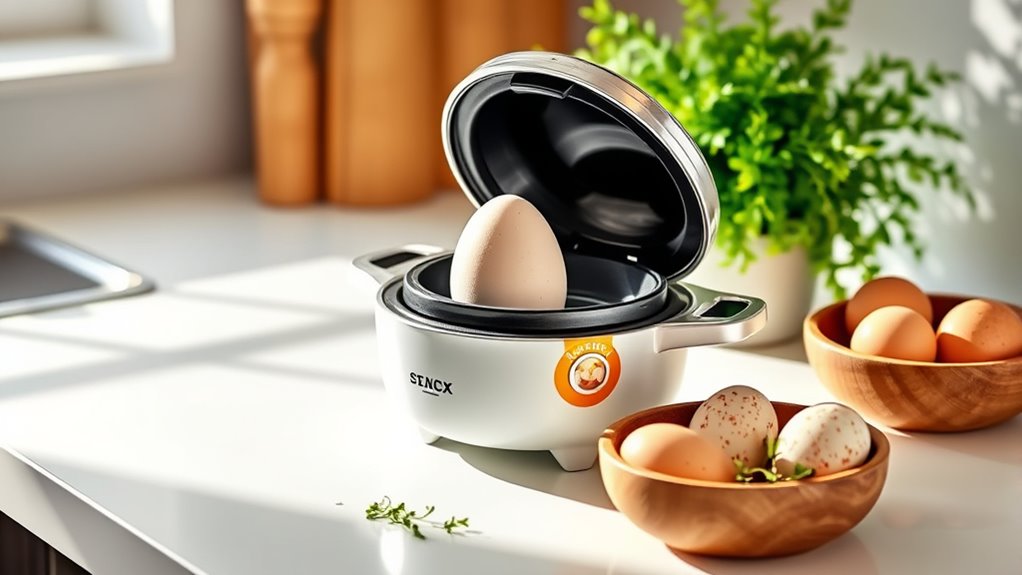
Before you start cooking, gather your microwave egg poacher and make sure it’s clean and dry. A spotless poacher guarantees your microwave egg cooks evenly and tastes fresh. Next, prepare your eggs—choose fresh ones for the best results.
Avoid cracking the yolk when you place each egg into the poacher cups. Adding about 1/2 teaspoon of water to each compartment helps create steam, which cooks the egg perfectly. Make sure not to overfill or underfill the poacher, as this affects cooking time and texture.
Finally, double-check that the lid fits securely on your egg poacher before placing it in the microwave. Proper preparation sets you up for quick, easy, and delicious microwave egg results every time.
Crack and Pierce Eggs in the Poacher Cups
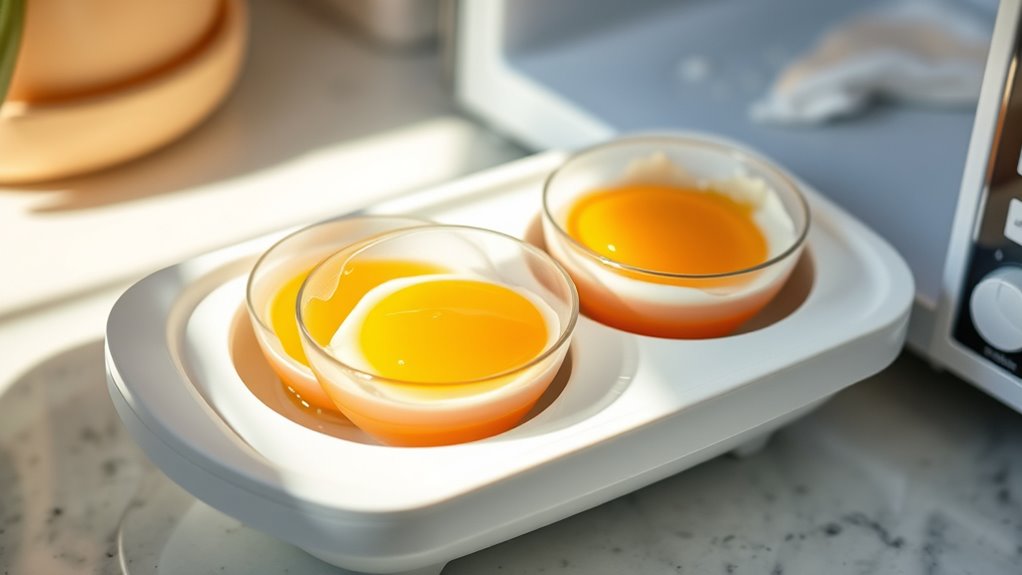
Once your egg poacher is prepped and ready, carefully crack each egg into the designated cups, keeping the yolks intact. Be sure not to overfill the cups; crack the egg directly into the space provided. Handle the eggs gently to avoid breaking the yolk before cooking.
Next, use a fork or toothpick to pierce the yolk once in each cup. This step prevents the yolk from bursting while cooking in the microwave. Double-check that each egg is centered in its cup to promote even cooking and prevent any spills.
Add Water or Butter to Each Egg Cup
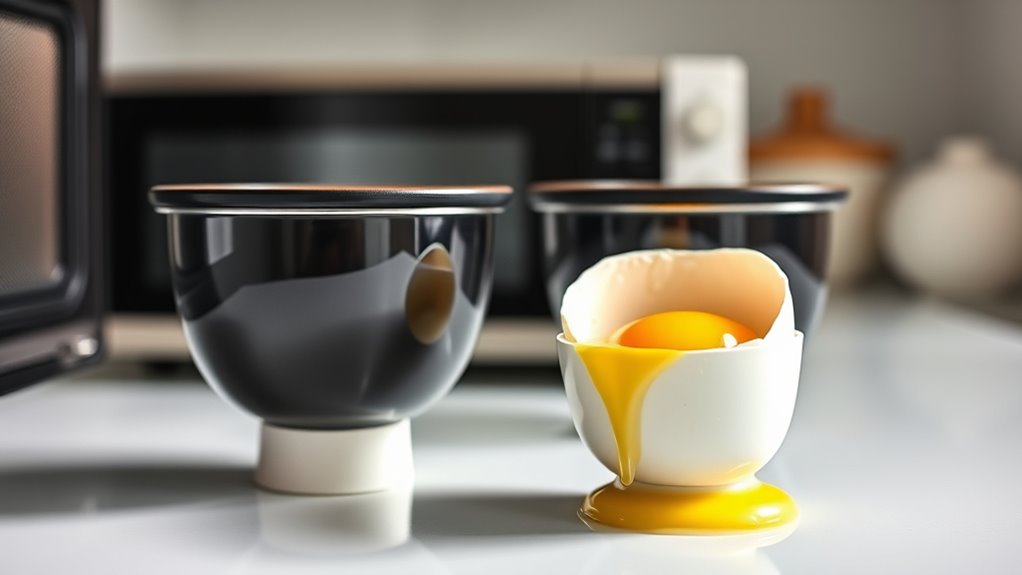
Before cracking your eggs, add about a teaspoon to a tablespoon of water or melted butter to each cup. Water helps create steam for tender eggs, while butter adds a rich flavor.
Just make sure the liquid lightly coats the bottom to prevent sticking and adjust the amount based on your microwave’s power.
Water Quantity Tips
Although it might seem minor, adding about ½ teaspoon of water or melted butter to each egg cup plays a crucial role in creating steam, which helps you achieve tender, evenly cooked poached eggs. When using your egg poacher, make sure to measure the water carefully—too much can cause overflow or soggy eggs.
Aim to add just enough water to touch the bottom of the egg yolk or slightly cover the whites. This precise water quantity ensures consistent cooking times and prevents uneven results. Pouring a small amount of water into each cup also keeps the eggs moist, improving texture and preventing dryness.
Butter Benefits
Adding a small amount of melted butter to each egg cup not only helps create the steam needed for even cooking but also adds a rich flavor and prevents the eggs from sticking during microwaving.
When you use butter, your poached eggs develop a subtle creaminess that elevates dishes like eggs benny. To get the best results, add about 1/2 teaspoon of melted butter to each compartment before microwaving.
This technique reduces the risk of eggs exploding or drying out, ensuring tender, evenly cooked eggs every time. While water creates a more traditional poached egg with a delicate yolk, butter gives your eggs a richer taste and smoother texture—perfect if you want to add a little extra indulgence to your breakfast favorites.
Close the Lid and Microwave the Eggs
Once you’ve cracked the eggs and added water, securely close the lid of your microwave poached egg cooker to prevent spills and lock in steam for even cooking. Make sure to press the lid down firmly but gently, aligning the hinges properly to avoid leaks or damage.
Close the lid completely before microwaving to trap heat and steam inside, which cooks the eggs evenly. Microwave the eggs for the recommended time, usually 30-45 seconds per egg, depending on your microwave’s power.
After cooking, don’t rush to open the lid; let the eggs rest with the lid closed for about 30 seconds to finish setting. When ready, carefully open the lid away from your face to avoid steam burns.
Check Egg Doneness and Adjust Cooking Time
After microwaving, check your eggs for doneness by gently testing the yolk and whites with a fork or toothpick. Using your egg poacher, follow these steps to guarantee your eggs are good and cooked just right:
After microwaving, gently test eggs with a fork or toothpick to ensure perfect doneness every time.
- Rest the eggs for 30 seconds after cooking, then test again to allow residual heat to finish cooking.
- If the yolk or whites are still runny, microwave in 5-10 second increments to avoid overcooking.
- Adjust times based on your microwave’s wattage; higher wattage means shorter cooking time.
Remove Eggs Carefully and Serve Immediately
When your eggs are done, open the cooker carefully to avoid steam burns. Use a spoon or tongs to gently lift the eggs out without breaking the yolk.
Serve them immediately to enjoy their perfect texture before they overcook from residual heat.
Handling Eggs Safely
Although the microwave poacher will be hot, you should open it carefully to avoid steam burns—using a towel or oven mitt if needed. When handling your egg poacher, follow these steps to keep things safe and neat:
- Handle the lid and compartments gently to prevent spills or damage that could make serving or cleaning tricky.
- Use a spoon or fork to remove the eggs carefully from the poacher’s compartments, avoiding breaking the yolk or shape.
- Serve the eggs immediately to enjoy the best texture and avoid overcooking from residual heat.
Serving Tips Immediately
Since steam can cause burns, you should open the microwave poacher lid carefully and use a spoon or spatula to gently lift the eggs out without breaking the yolks. Handling the eggs this way preserves the delicate egg yolk, keeping it intact and visually appealing.
Once removed, serve the eggs immediately to enjoy the best texture and avoid overcooking caused by residual heat. Place the eggs on a plate or toast right away to prevent sogginess and maintain their presentation.
As part of your serving tips, season the eggs promptly with salt, pepper, or your favorite toppings to enhance flavor while the eggs are still warm. Following these steps ensures your poached eggs taste perfect every time.
Clean and Maintain Your Egg Poacher
To keep your microwave poached egg cooker in top shape, you should always hand wash it with warm, soapy water and a soft sponge to avoid damage and buildup. Avoid abrasive scrubbers and dishwashers unless your model says it’s safe.
To clean and maintain your egg poacher effectively:
- Regularly clean the hinge area to remove any stuck residue that might cause sticking or breakage.
- Dry the poacher thoroughly after washing to prevent mold and preserve its heat resistance.
- Store it in a dry place with the lid open or slightly ajar to allow airflow and avoid odors.
Following these steps helps your poacher last longer and ensures every egg is perfectly cooked.
Frequently Asked Questions
How to Use a Microwave Poached Egg Cooker?
You crack eggs into the compartments, pierce the yolks, add water, close the lid, and microwave for 30-60 seconds.
After resting, carefully remove the eggs, season them, and enjoy your perfectly poached eggs quickly.
How to Do Poached Eggs in the Microwave?
You’ll whip up poached eggs faster than a rocket launch! Crack eggs, prick yolks, add water, microwave 30-45 seconds, then let rest.
Open carefully, and enjoy perfectly poached eggs in a snap!
How Do You Use the Egg Cooker in the Microwave?
You crack eggs into the compartments, pierce yolks, add water, close the lid, and microwave on high for 30-45 seconds per egg.
Then, carefully remove the eggs and drain excess water before serving.
Do You Use Hot or Cold Water in a Microwave Egg Poacher?
You’ll use cold water—it’s the calm river that gently cooks your egg, ensuring even warmth and perfect poaching.
Hot water rushes too fast, risking splatters and uneven results, so stick with cold for best eggs every time.
Conclusion
Using your microwave poached egg cooker is quick and simple—practice makes perfect! By prepping your poacher, cracking eggs carefully, adding water or butter, and microwaving just right, you’ll enjoy delicious poached eggs in no time.
Remember, “a watched pot never boils,” so trust the process and adjust cooking times as needed. With a little care in cleaning afterward, you’ll keep your poacher ready for many tasty breakfasts ahead.
Enjoy using your microwave poached egg cooker to create perfect poached eggs effortlessly. This handy kitchen tool makes breakfast preparation fast and easy, ensuring you have a nutritious start to your day every time.