
How to Tell if Cory Eggs Are Fertile
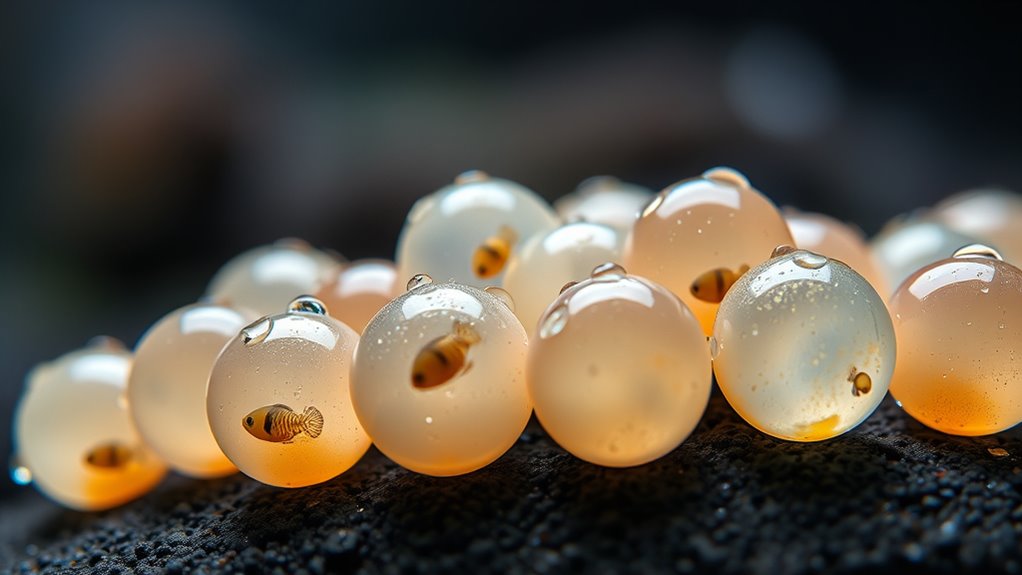
You can tell if Cory eggs are fertile by watching their color and texture soon after spawning. Fertile eggs turn from white to beige or light brown and look clear, firm, and glossy. They’ll feel smooth and stay firm, while infertile eggs remain white and may develop fuzz or mold.
Fertilized eggs also show embryo development within days. Keep an eye on these signs to guarantee healthy embryos.
You’ll find helpful tips on care and hatching ahead.
When and How Cory Eggs Are Fertilized
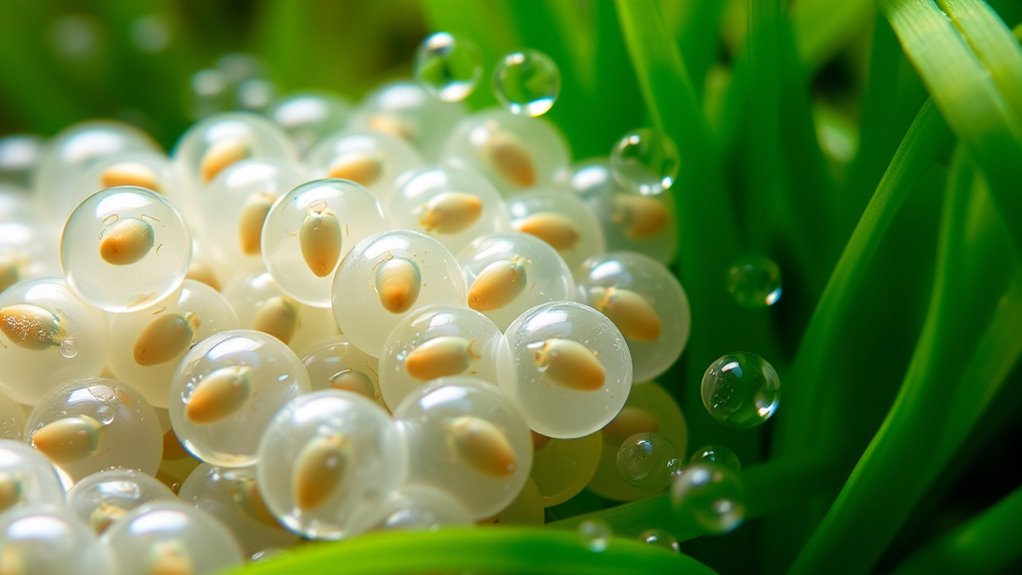
Although it happens quickly, fertilization of Corydoras eggs is an essential step that you need to understand. During spawning, the female collects sperm from the male, allowing fertilization to occur internally before she lays the eggs.
Once the eggs are deposited on surfaces like glass or plants, fertilization happens immediately or within about 10 minutes. This quick timing ensures the eggs develop properly and increases their chances of successful hatching.
Because fertilization occurs so soon after spawning, it’s imperative that you collect or monitor the eggs promptly. Knowing when and how fertilization happens helps you manage the eggs effectively, giving you a better chance of raising healthy Corydoras fry.
How to Spot Fertile Cory Eggs by Color and Texture
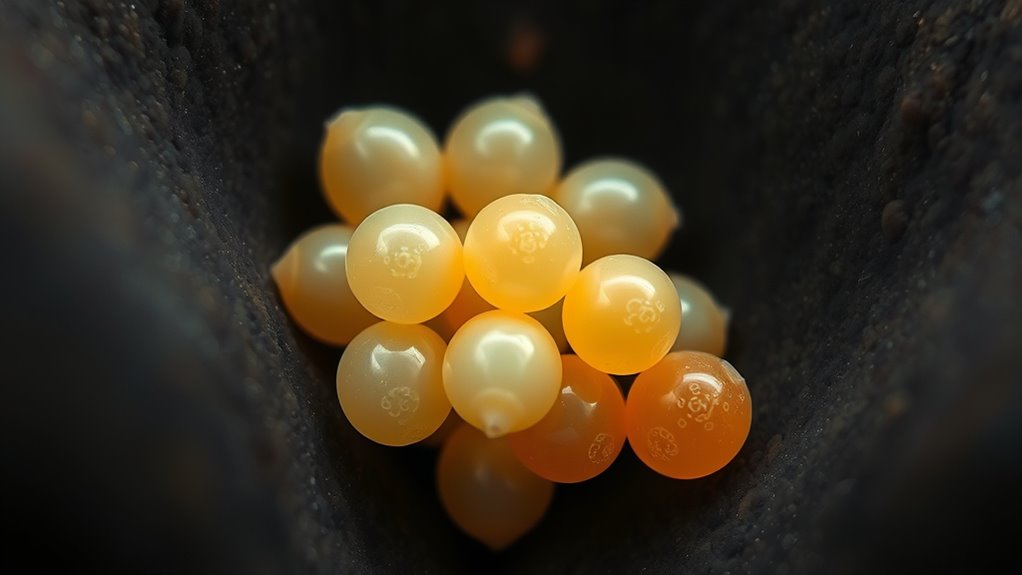
When you observe Cory eggs closely, their color and texture offer clear clues about their fertility. Fertile cory eggs usually shift from white to a light brown or beige within hours, showing a more pigmented and transparent appearance. Their texture is smooth and firm, indicating health and viability.
In contrast, unfertilized eggs remain white, often fuzzy, and may develop mold.
Keep these points in mind to spot fertile cory eggs by color and texture:
- Fertile eggs change color quickly from white to beige or light brown.
- Their surface looks clear, uniform, and glossy.
- Texture feels firm and smooth to the touch.
- Unfertilized eggs stay white and develop fuzziness.
- Mold or fungus usually appears on infertile eggs.
Regular inspection helps you confidently identify fertile cory eggs.
What Happens to Cory Eggs in the First Few Days
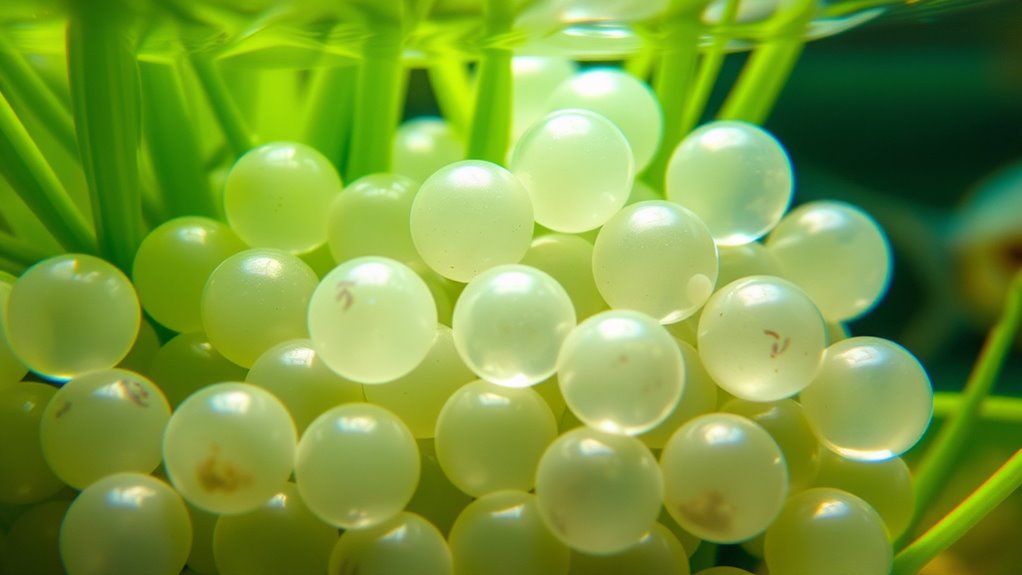
As you monitor your Cory eggs in the first few days, you’ll notice key changes that signal healthy development or potential issues. Fertilized eggs typically show clear signs of embryo development, like small movements or darkening inside the egg. You’ll also see the egg color gradually shift from white to light brown or beige, indicating progress.
In contrast, unfertilized eggs usually stay clear or white and remain static. This early period is vital because fertilized eggs will hatch in 3 to 5 days, depending on water temperature. By regularly observing the eggs’ color and any embryo activity, you can distinguish healthy eggs from those that are non-viable, allowing you to focus on caring for the developing embryos effectively.
Preventing Fungus and Caring for Cory Eggs
To keep your Cory eggs healthy, you’ll need to prevent fungal growth by maintaining a clean, well-oxygenated environment with gentle water flow. Proper fungal prevention is vital for successful egg care. Focus on maintaining excellent water quality and promptly removing any fuzzy or white eggs to stop mold from spreading.
Here’s how you can guarantee effective fungal prevention and egg care:
- Use low concentrations of methylene blue to inhibit mold growth.
- Apply hydrogen peroxide carefully in small doses to treat fungus.
- Keep water parameters stable: temperature, pH, and cleanliness.
- Provide gentle aeration to oxygenate the water without disturbing eggs.
- Inspect eggs daily and remove any showing signs of fungus or damage.
Caring for Cory Fry After Hatching
Once the cory fry hatch, you’ll need to provide them with a gentle environment and appropriate food like infusoria or newly hatched brine shrimp to guarantee their survival and healthy growth. Transfer the fry carefully from the breeding box to a separate tank with soft filtration and gentle aeration to avoid stressing the delicate fry.
Make sure water conditions remain stable, maintaining a temperature around 75-78°F (24-26°C) and low lighting to reduce stress. Offer small, frequent feedings of micro-worms or powdered fry food to support rapid growth. Provide hiding spots such as plants or moss to protect the fry from adult fish.
Frequently Asked Questions
How Long Does It Take for Cory Catfish Eggs to Hatch?
Cory catfish eggs typically hatch in 3 to 5 days. You’ll notice embryos developing and slight movement within 24 to 48 hours if conditions are right, especially with water temperatures around 78-82°F.
Keep monitoring closely!
Is There a Way to Check if an Egg Is Fertilized?
You can peek inside like a tiny window—fertilized cory eggs darken to a warm beige and show embryo movement after days.
Unfertilized eggs stay pale, fuzzy, and lifeless, signaling they won’t hatch.
How Do Corydora Eggs Get Fertilized?
Corydora eggs get fertilized when the male releases sperm as the female lays eggs. You’ll notice him following closely, ensuring sperm contacts eggs just after deposition, fertilizing them within minutes for successful development.
What Are the Signs of a Fertile Egg?
You’ll spot fertile cory eggs by their tan tint, tidy texture, and uniform shape. Watch for wiggling embryos within days.
White, fuzzy, or moldy eggs won’t thrive, so trust these traits to tell true fertility.
Conclusion
Now that you know how to spot fertile Cory eggs by their clear, slightly yellowish color and firm texture, you’ll feel more confident caring for them.
For example, imagine you just noticed your eggs turning cloudy—that’s a sign of fungus, so you quickly remove affected eggs to save the rest.
With these simple steps, you’ll help your Cory fry hatch strong and healthy, turning your tank into a thriving little ecosystem. Knowing how to tell if Cory eggs are fertile is key to successful breeding and maintaining a vibrant aquarium.