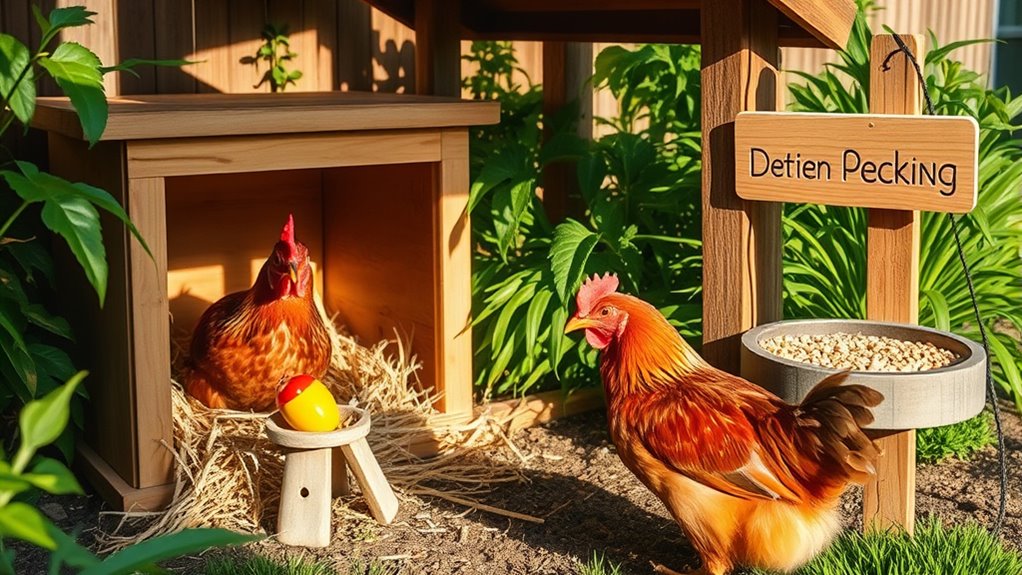
How to Stop Chickens Eating Their Own Eggs Step by Step
To stop your chickens from eating their own eggs, start by watching for yolk smears or broken shells around nests. Collect eggs 2-3 times daily and remove cracked ones quickly. Providing a balanced diet with extra protein and calcium, like crushed oyster shells, is essential to discourage egg eating.
Set up quiet, clean nest boxes with roll-away designs or covers to hide eggs. Place fake or mustard-filled eggs as deterrents to keep chickens from developing the habit.
If problems persist, learn how to manage persistent egg-eaters for a lasting solution. Taking these steps will help maintain a healthy, productive flock.
Why Chickens Eat Eggs and How to Spot It
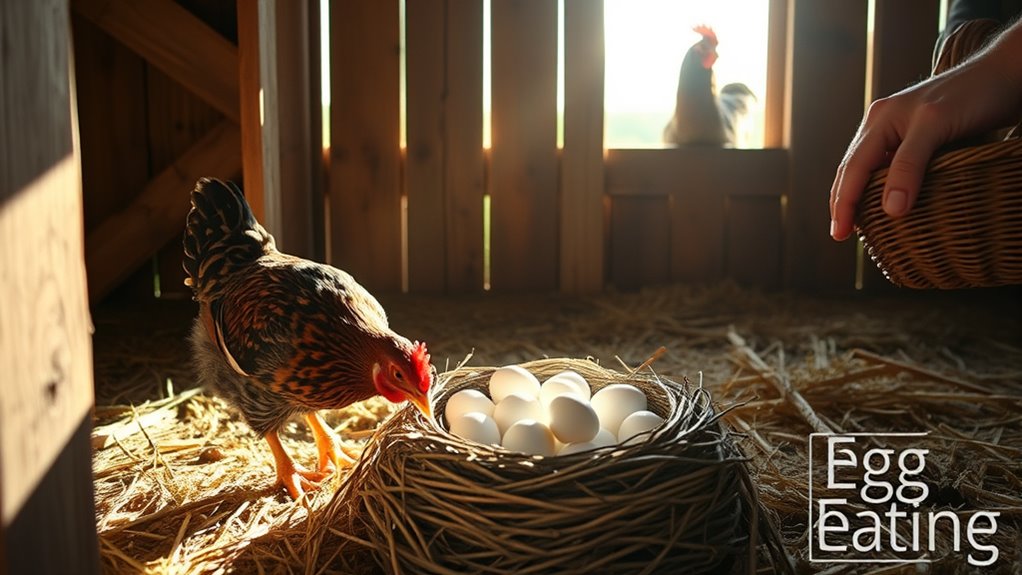
Although it might seem puzzling, chickens often start eating their own eggs due to nutritional gaps, especially when they lack enough calcium or protein. This calcium deficiency drives them to peck at eggshells for the minerals they need. Early signs of egg-eating include yolk smears or egg shell fragments around the nest box and sticky residues on hens’ beaks or feathers.
You might also notice egg breakage inside or near the nest box, which can trigger further egg pecking out of curiosity or habit. If you spot a hen with egg on her face or in her beak, it’s a clear indicator she’s started consuming eggs. Catching these early signs is vital to prevent egg-eating from escalating into a repeated problem.
How to Collect and Manage Eggs to Reduce Temptation
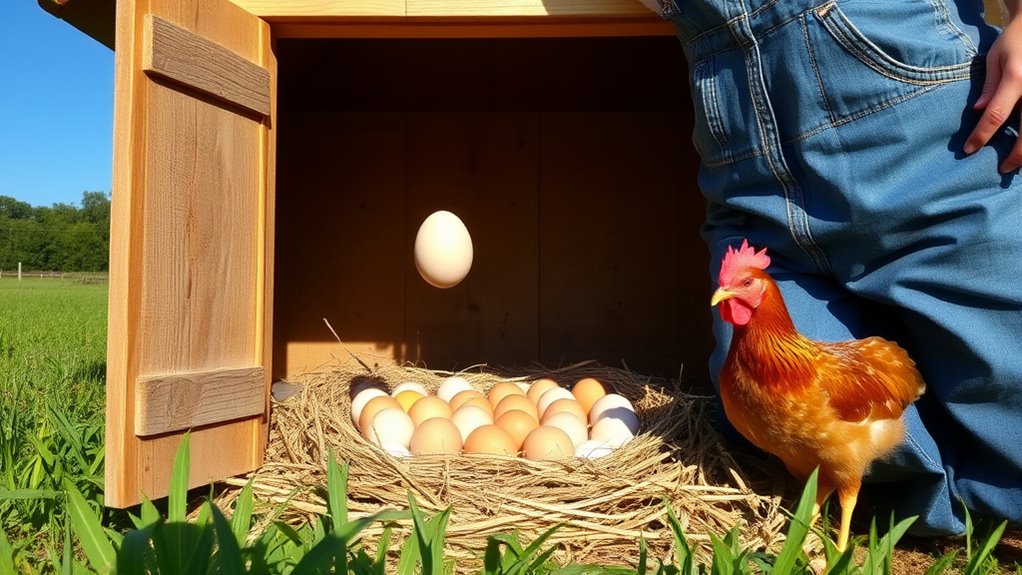
You should collect eggs at least two to three times a day to keep them out of reach and reduce temptation. Handle each egg gently to avoid cracks that might attract your hens to peck.
Frequent Egg Collection
Since hens are less likely to peck at eggs that aren’t left unattended, collecting eggs frequently—at least two to three times a day—significantly reduces their temptation to eat them. Frequent egg collection means you minimize the time eggs sit in nest boxes, cutting down on egg-eating behavior.
When you handle eggs gently during egg collection, you avoid cracks that might encourage pecking. Keeping your chicken coop’s nesting areas clean and organized also makes it easier to spot and remove eggs promptly.
To manage eggs effectively, remember to:
- Collect eggs regularly, at least 2-3 times daily
- Remove cracked or broken eggs immediately
- Keep nest boxes clean and accessible
- Maintain a consistent egg collection schedule
These steps help stop chickens from eating their own eggs.
Gentle Egg Handling
When collecting eggs, handle them gently to prevent cracks that might attract hens to peck. Use smooth, deliberate movements and clean, dry hands during egg collection to minimize stress on both you and your flock. Always pick eggs carefully from the nest boxes to prevent cracking or breakage, which encourages egg-eating behavior.
Place eggs softly into a clean container, avoiding any jostling to maintain egg integrity. Remove any cracked or broken eggs immediately to eliminate temptations. Gentle handling during collection not only preserves the eggs but also helps discourage hens from developing bad habits.
How to Adjust Your Flock’s Diet to Stop Egg Eating
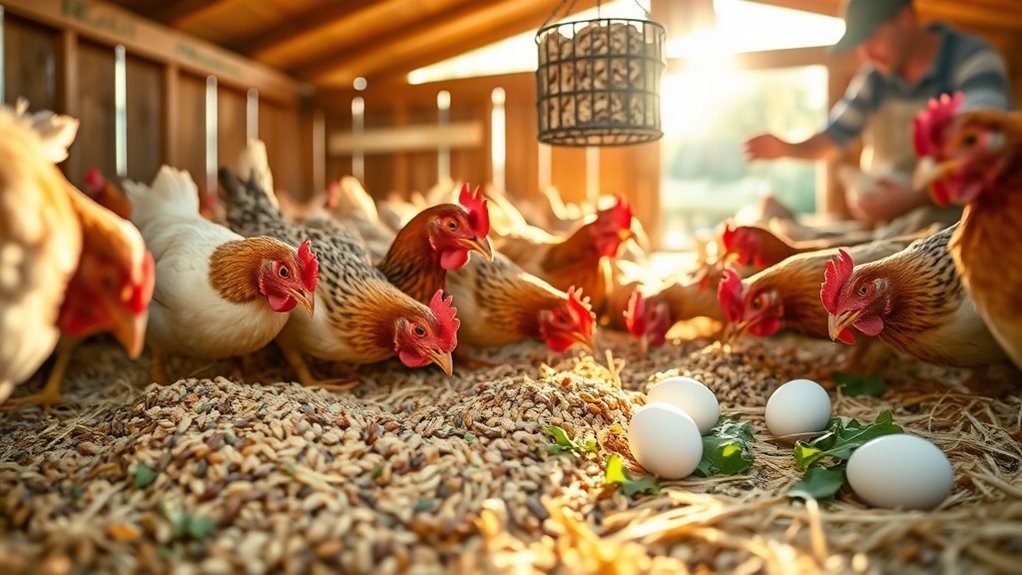
Although egg eating can stem from various causes, adjusting your flock’s diet plays a crucial role in stopping this behavior. Nutritional deficiencies, especially in protein and calcium, often trigger egg-eating behavior. You can improve your hens’ diet by ensuring it contains 16-18% protein and plenty of calcium to strengthen eggshells and reduce breakage in the nesting box.
Boosting protein and calcium in your hens’ diet helps prevent egg-eating by strengthening shells and reducing breakage.
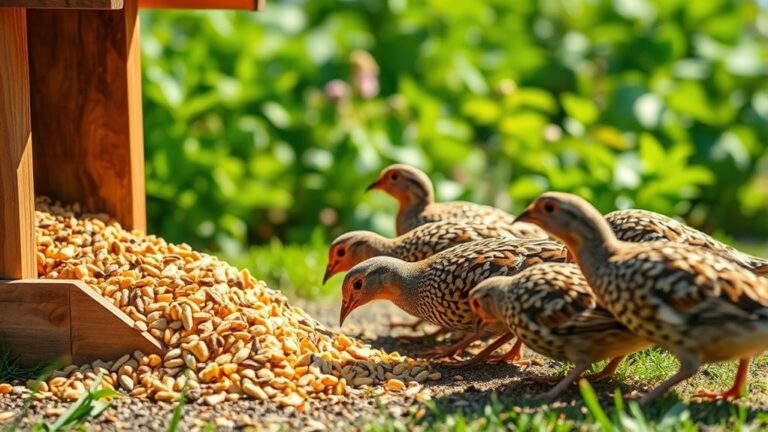
- Provide crushed oyster shell free-choice to boost calcium intake
- Feed high-protein treats like mealworms or sunflower seeds
- Avoid raw eggs; offer cooked eggs if supplementing protein
- Regularly adjust the diet seasonally to address nutritional deficiencies
How to Set Up Nesting Boxes to Keep Eggs Safe and Hidden
You’ll want to place nesting boxes in quiet, dimly lit spots to keep eggs out of sight and reduce pecking temptation.
Controlling light by using curtains or dark materials helps hide the eggs from your hens. This setup makes it less likely for your chickens to discover and eat their own eggs.
Nest Box Placement
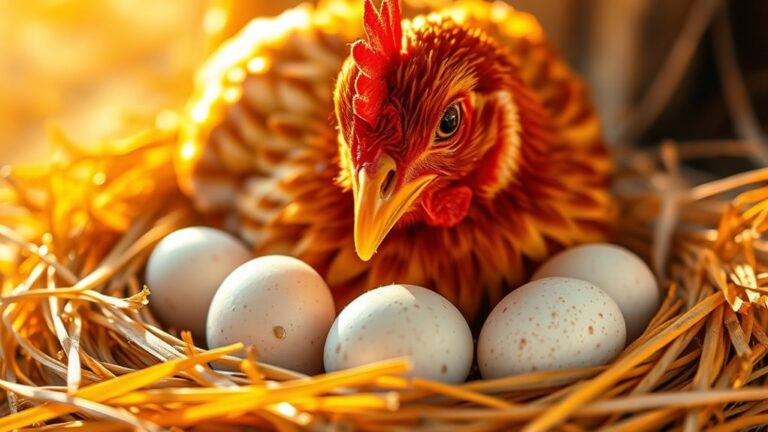
Since hens are less likely to peck at eggs they can’t easily see, position your nesting boxes in quiet, dark spots away from busy areas. Proper nest box placement helps conceal eggs early, reducing temptation for hens to peck.
To protect your eggs, consider these steps:
- Place nesting boxes about 18-24 inches above the ground to prevent accidental damage.
- Use a roll-away nest or slanted design so eggs roll out of reach right after laying.
- Add covers, curtains, or sacking strips to conceal eggs inside the boxes.
- Keep nesting areas clean and spacious to minimize stress and overcrowding.
Light Control Techniques
When you control the lighting around your nesting boxes, you can considerably reduce hens’ urge to peck or eat their eggs. Start by positioning the nest in a quiet, low-light corner of the coop, creating a dim environment that helps prevent egg pecking. Use light control techniques like covering the nesting area with dark-colored fabric or sacking to further darken the coop after peak laying times.
Installing nest box curtains or partitions blocks hens’ view of the eggs, reducing temptation. Consider using slanted or roll-away nest boxes so eggs roll out of sight and reach, keeping them safe. By combining these methods, you’ll effectively cover nesting areas and provide a darkened coop that discourages hens from damaging their eggs.
How to Use Fake Eggs and Mustard Eggs to Break the Habit
Although breaking the egg-eating habit can be challenging, using fake eggs and mustard eggs offers an effective solution. By placing fake eggs in the nesting area, you give egg-eating hens a visual cue to avoid pecking real eggs.
Mustard eggs, filled with spicy mustard or hot sauce, create an unpleasant taste that helps deter hens from eating eggs.
To break the habit, try these steps:
- Place ceramic, wooden, or plastic fake eggs in nest boxes as decoys.
- Fill real eggshells with mustard or hot sauce and return them to the nesting area.
- Regularly check and replace fake eggs to keep them effective.
- Combine with frequent egg collection to reinforce good laying behavior and deter hens.
How to Identify and Handle Persistent Egg-Eating Hens
Using fake and mustard eggs can help reduce egg-eating, but sometimes a few hens persist despite your efforts. To identify egg-eaters, observe nesting closely for yolk stains or shell debris on feathers. Cameras or dye-filled eggs can confirm which hen shows egg-eating behavior.
Isolate hens suspected of egg-eating to see if the problem stops, helping you manage persistent egg eaters effectively.
| Sign to Identify Egg-Eaters | How to Handle It |
|---|---|
| Yolk stains on feathers | Isolate and observe |
| Shell debris near beak | Remove from flock if needed |
| Sticky beak | Use cameras to confirm |
| Frequent nest visits | Place dye-filled eggs |
| Persistent egg-eating | Consider culling |
Isolating or removing persistent egg-eating hens stops the behavior and protects your flock’s eggs.
Frequently Asked Questions
How Can You Stop Chickens From Eating Their Own Eggs?
You can stop chickens from eating eggs by collecting eggs frequently, providing a high-protein diet, using fake eggs to deter pecking, darkening nesting boxes, and removing or isolating persistent egg-eaters promptly to break the habit.
How to Teach Chickens Not to Eat Their Eggs?
You can’t let your chickens become egg-eating monsters! Teach them by regularly replacing eggs with fake ones, collecting eggs often, darkening nests, and keeping them busy with fun activities.
They’ll learn to leave eggs alone fast!
How Do I Break the Egg Eating Habit?
You break the egg-eating habit by promptly removing cracked eggs, using fake eggs as decoys, collecting eggs frequently, enriching their environment to prevent boredom, and covering nesting boxes to hide real eggs from your hens’ view.
Removing cracked eggs quickly helps prevent hens from getting used to eating broken eggs. Using fake eggs as decoys can distract them from real ones. Collecting eggs often reduces the chances of eggs being damaged.
Providing enrichment in their environment keeps hens entertained and less likely to peck at eggs out of boredom. Covering nesting boxes hides the real eggs from their sight, which can discourage egg eating.
Why Would a Chicken Start Eating Its Own Eggs?
You might think your chickens suddenly crave gourmet egg feasts, but they start eating their own eggs because of boredom, stress, or nutritional gaps.
Once one tastes an egg, the whole flock might join the party.
Conclusion
Remember, stopping egg eating is like breaking any habit—it takes patience and consistency. Just like a gardener patiently pulls weeds before they overrun the garden, you’ll need to stay vigilant with collecting eggs frequently and adjusting your hens’ environment.
One farmer shared how using fake eggs was like planting a “no trespassing” sign, confusing her hens enough to stop the behavior. Stick with these steps, and you’ll soon enjoy a healthy, happy flock—and intact eggs!
By following these simple steps, you can effectively stop chickens eating their own eggs and maintain a productive and peaceful coop.